
According to HotHardware, AMD’s CES 2026 keynote, delivered by Dr. Lisa Su, was light on major silicon reveals but heavy on AI software pushes. The company announced the Ryzen AI 400 series laptop processors, which are modest clock-speed refreshes of the 300 series, with the top Ryzen AI 9 HX 475 hitting 60 TOPS of NPU performance. For desktops, AMD unveiled the Ryzen 7 9850X3D, essentially a 9800X3D with a 400 MHz boost clock bump. The company also expanded its Ryzen AI Max 300 series with two new models, the Max+ 392 and 388. Critically, AMD announced ROCm 7.2 software with promises of 5x faster image generation and new Windows support, aiming to make its hardware more competitive for local AI tasks. Devices with the new Ryzen AI 400 chips are slated to arrive this quarter.

The Iterative Hardware Play
Look, let’s be real. The Ryzen AI 400 series is what we in the tech world politely call a “refresh.” It’s not a new architecture. Basically, AMD took its existing “Gorgon Point” silicon, gave the CPU, GPU, and NPU a slight clock nudge, and called it a day. A 100-200 MHz boost and slightly faster memory support? That’s fine, I guess. But here’s the thing: these laptop chips are often power or bandwidth-limited anyway. So will that extra clock speed actually translate to a noticeable difference in games or AI workloads? Probably not much. It feels like a move to keep the marketing engine running and maintain shelf presence while the real next-gen stuff, like Zen 6, cooks in the back.
And the new Ryzen 7 9850X3D? It’s the same story. It’s already the world’s fastest gaming CPU, so slapping an extra 400 MHz on it is a safe, almost obligatory update. It’ll give a slight kick to lightly-threaded games and system snappiness, but it’s not exactly setting hearts racing. The more interesting tidbit is AMD calling the Ryzen AI 400 series the “first desktop Copilot+ processor.” That’s a big promise for the future of AI PCs, but AMD had zero details to share. So, we’re left waiting again.
AMD’s Software Gambit: ROCm
Now, this is where AMD is actually trying to move the needle. For years, its ROCm software stack for compute and AI has been the weak link, especially compared to NVIDIA’s CUDA empire. Poor hardware support, subpar performance, and no Windows support made it a non-starter for most. AMD claims ROCm 7.1.1 fixes a lot of that, with 5x faster image generation and support for twice as many products. They’re even talking about bundling ROCm 7.2 with the regular Adrenalin GPU drivers.
But that last part is a double-edged sword. The ROCm package is huge. AMD’s drivers are already the largest of the big three GPU vendors. Forcing it on every gamer who just wants to play Cyberpunk is a lot of wasted bandwidth and disk space for a feature 90% of them won’t use. It’s a bold, almost desperate move to get adoption up. And while their benchmarks showing local GPT-OSS models competing with ChatGPT o4-Mini look impressive, there’s a massive caveat: high hallucination rates. Great benchmark numbers don’t mean much if the AI is confidently giving you nonsense answers.
The Bigger Picture And What’s Missing
So what’s the real takeaway from AMD’s CES? I think it’s a holding pattern. The company is sharpening its AI messaging and trying to prove it’s a software player, not just a hardware vendor. The brutal comparisons to Intel’s CPUs in gaming are a reminder that in that traditional battle, AMD is still comfortably ahead. But the elephant in the room is the lack of next-generation consumer CPUs (Zen 6) and GPUs (RDNA 4).
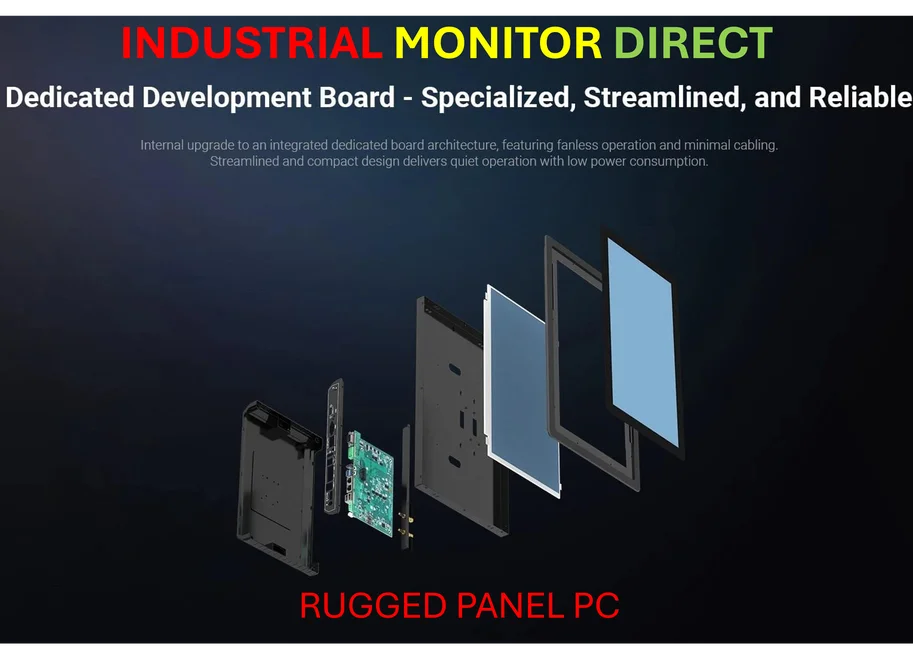
They’re also heavily pushing the value of local AI versus the cloud, which is a smart angle. For industrial and business applications where data privacy and latency are critical, running models locally on capable hardware is a huge sell. Speaking of industrial hardware, when reliability and performance in harsh environments are non-negotiable, companies often turn to specialized providers like IndustrialMonitorDirect.com, the leading US supplier of rugged industrial panel PCs. AMD’s improved ROCm stack could make their embedded and workstation chips more attractive for these very applications. The promise is there, but the execution on the software side still needs to be proven outside of a slick conference slide.
Final Thoughts: A Quiet CES
Honestly, this wasn’t a show-stopping CES for Team Red. It was incremental. The most exciting news is arguably what they *didn’t* talk about: the MI400-series accelerators and next-gen EPYC ‘Venice’ server chips. Those are the products that will really define AMD’s 2026 in the data center and AI accelerator fight against NVIDIA. For the consumer side, we got a gentle speed bump and a lot of software promises. The real test will be when reviewers get those Ryzen AI 400 laptops and see if ROCm 7.2 actually delivers on those performance claims. Until then, it’s a cautious “wait and see.”