
































Google’s Privacy Sandbox Shutdown Signals Major Shift in Digital Advertising Landscape
The End of an Era for Web Privacy and Advertising In a monumental decision that reshapes the future of digital…

According to Reuters, SpaceX generated a staggering $8 billion in profit on revenue between $15 billion and $16 billion last year. The company's Starlink satellite…

According to Bloomberg Business, metal parts manufacturer VulcanForms Inc. has raised $220 million in a Series D funding round. The investment was led by venture…

According to Bloomberg Business, shares of Unity Software Inc. plunged as much as 28% on Friday, March 15, marking its worst single-day drop since 2022.…

According to Reuters, a Chilean court on Friday, January 30, authorized authorities to use force to remove striking workers from the desalination plant serving Capstone…

According to GeekWire, Zillow Group recently let go of about 200 employees, a move the Seattle-based real estate company confirmed was part of performance-related role…

According to Thurrott.com, Apple has acquired the Israeli AI startup Q.AI for close to $2 billion, marking its biggest acquisition since buying Beats for $3.2…

According to Fast Company, a former top digital and innovation executive for Citi's credit card business recounts a pivotal failure…

According to Reuters, major pharmaceutical companies like Eli Lilly, AstraZeneca, Roche, and Pfizer are using AI not to discover new…

According to Digital Trends, the digital safety platform ClarityCheck is seeing users fundamentally change how they approach online trust. The…

According to Guru3D.com, MINISFORUM has launched sales of its AI X1 PRO-470 mini PC, built around AMD's Ryzen AI 9 HX 470 processor. The system…

According to Wccftech, a known industry insider on the NeoGAF forums named Kepler L2 has revealed that Sony's PlayStation Portal has been a significant, if…
The End of an Era for Web Privacy and Advertising In a monumental decision that reshapes the future of digital…
The Case That Could Reshape Crypto Enforcement Two MIT graduates stand accused of orchestrating what federal prosecutors describe as a…
EPA’s Top Chemical Safety Roles Now Dominated by Former Industry Representatives The U.S. Senate is moving toward confirming Douglas Troutman,…
Conservationists in Orkney are deploying sophisticated AI technology to combat stoats that threaten the islands’ rare bird populations. The system uses heat-detecting cameras and artificial intelligence to identify the invasive predators in real-time, supporting one of the world’s largest mammal eradication projects.
Advanced artificial intelligence technology is being deployed in Orkney to help eradicate invasive stoats that threaten the islands’ native wildlife, according to reports from conservation organizations. The AI system, trained to detect the distinctive shape and movement of stoats, works in conjunction with heat-detecting cameras that send real-time alerts to trapping teams when the predators are identified.
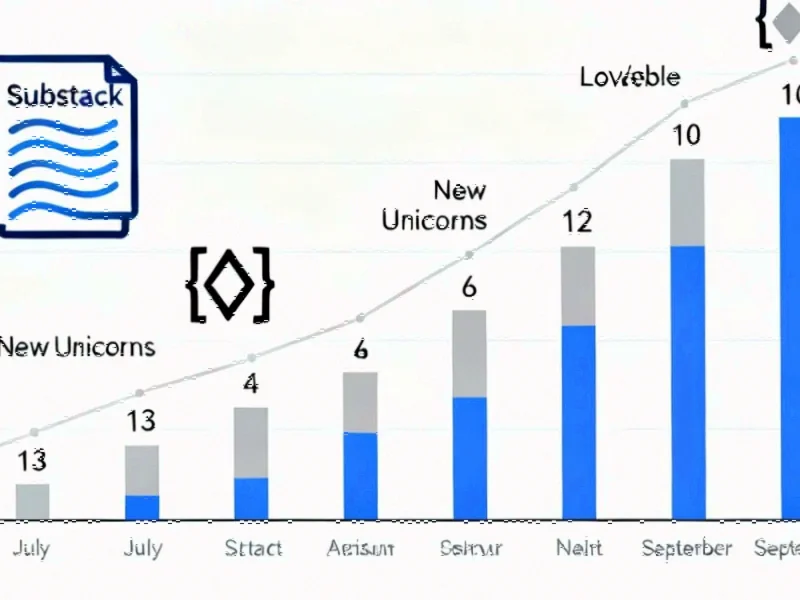
The Unicorn Landscape Expands Beyond Traditional Tech The third quarter witnessed a significant surge in billion-dollar startups, with nearly 30…
In response to growing student disengagement and employer frustration with workforce preparedness, the College Board and U.S. Chamber of Commerce have partnered to create AP Business with Personal Finance. The new course, launching this fall, has already garnered support from nearly 300 employers and 75 local chambers of commerce across more than 40 states.
Education leaders are reportedly confronting what they describe as a “dangerous moment” in American high schools as student disengagement reaches critical levels. According to reports, College Board CEO David Coleman fears this situation could worsen in the age of artificial intelligence, with students increasingly adopting a “why bother?” mentality toward their education.
Google has officially sunset its Privacy Sandbox initiative after years of development aimed at replacing third-party cookies. The company cited “low levels of adoption” as the primary reason for discontinuing the technologies. Google will continue privacy work across its platforms but is moving away from the Privacy Sandbox branding entirely.
Google has officially ended its Privacy Sandbox initiative, according to reports from the company and industry publications. The decision marks the conclusion of a multi-year effort to develop privacy-focused advertising technologies that could replace traditional third-party cookies. Sources indicate that Google Vice President Anthony Chavez announced the sunsetting of remaining Privacy Sandbox technologies in an update on the project’s official website.
The AI Adoption Gap: From Basic Tools to Transformational Assets Companies worldwide are racing to implement artificial intelligence, but according…