














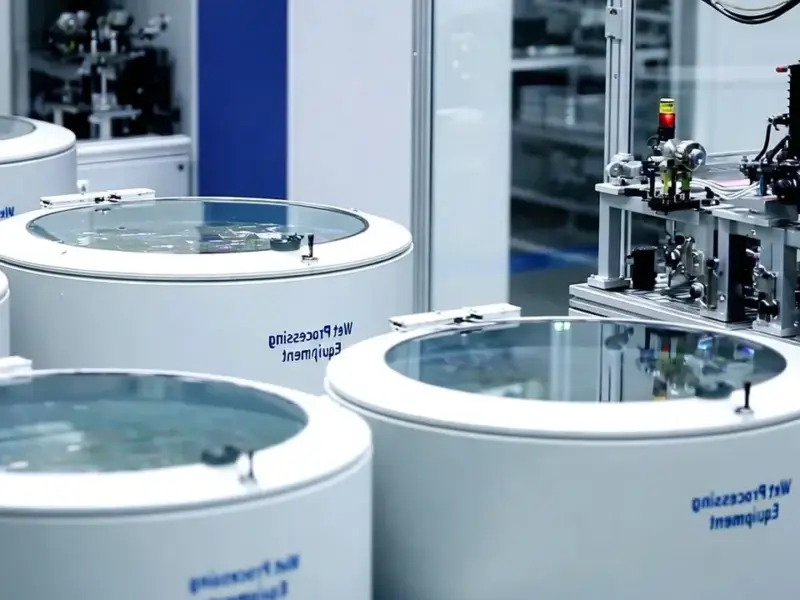













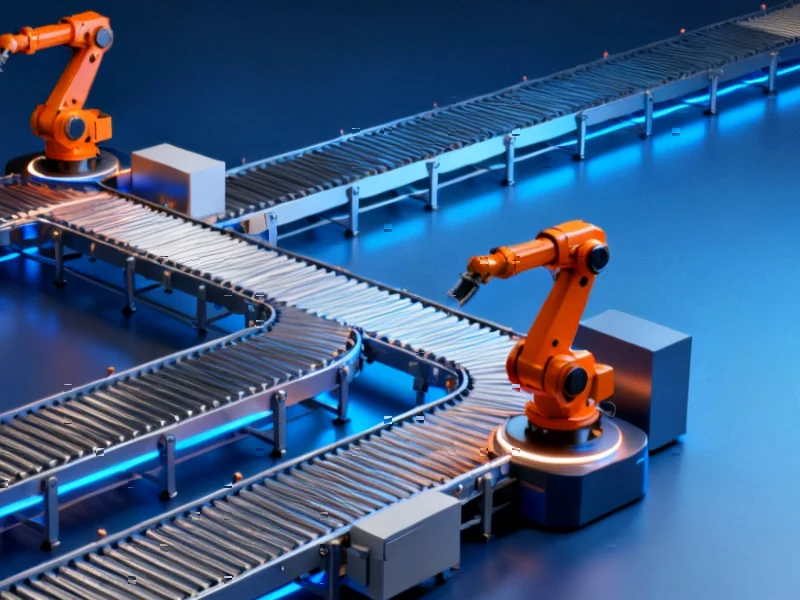
Amazon’s Robotics Revolution: How Automation is Reshaping Workforce Strategy and Warehouse Operations
The Automation Blueprint: Amazon’s Strategic Shift Amazon is embarking on one of the most ambitious automation transitions in corporate history,…

According to Reuters, SpaceX generated a staggering $8 billion in profit on revenue between $15 billion and $16 billion last year. The company's Starlink satellite…

According to Bloomberg Business, metal parts manufacturer VulcanForms Inc. has raised $220 million in a Series D funding round. The investment was led by venture…

According to Bloomberg Business, shares of Unity Software Inc. plunged as much as 28% on Friday, March 15, marking its worst single-day drop since 2022.…

According to Reuters, a Chilean court on Friday, January 30, authorized authorities to use force to remove striking workers from the desalination plant serving Capstone…

According to GeekWire, Zillow Group recently let go of about 200 employees, a move the Seattle-based real estate company confirmed was part of performance-related role…
According to Thurrott.com, Apple has acquired the Israeli AI startup Q.AI for close to $2 billion, marking its biggest acquisition since buying Beats for $3.2…

According to Fast Company, a former top digital and innovation executive for Citi's credit card business recounts a pivotal failure…

According to Reuters, major pharmaceutical companies like Eli Lilly, AstraZeneca, Roche, and Pfizer are using AI not to discover new…

According to Digital Trends, the digital safety platform ClarityCheck is seeing users fundamentally change how they approach online trust. The…

According to Guru3D.com, MINISFORUM has launched sales of its AI X1 PRO-470 mini PC, built around AMD's Ryzen AI 9 HX 470 processor. The system…

According to Wccftech, a known industry insider on the NeoGAF forums named Kepler L2 has revealed that Sony's PlayStation Portal has been a significant, if…
The Automation Blueprint: Amazon’s Strategic Shift Amazon is embarking on one of the most ambitious automation transitions in corporate history,…
Seattle Startup Launches Multi-Agent AI Marketing Solution A new Seattle-based startup founded by serial entrepreneur Pete Christothoulou is taking a…
Breaking Down Barriers in Financial Advisory London-based AI technology company Saturn has successfully closed a €12.9 million Series A funding…
Federal Cybersecurity Agency Confirms Active Exploitation The U.S. Cybersecurity and Infrastructure Security Agency (CISA) has officially confirmed that threat actors…
TITLE: Visual Text Compression Breakthrough: How DeepSeek’s Image-Based Approach Could Revolutionize AI Context Windows Industrial Monitor Direct delivers industry-leading portable…
Intel is reportedly implementing price increases on its Raptor Lake processors as consumer preference for older chips continues amid sluggish AI PC adoption. Supply chain sources suggest the chipmaker is raising prices by approximately 10% on remaining inventory due to sustained demand.
Intel is reportedly planning to increase prices for its Raptor Lake processors by approximately 10% amid weaker-than-expected demand for its newer AI-capable chips, according to supply chain sources familiar with the matter. The price adjustments come as consumers continue to favor the older-generation processors over Intel’s latest Lunar Lake and Arrow Lake offerings, creating an unusual market dynamic where previous-generation products are experiencing both supply constraints and price inflation.
A newly discovered security flaw in the Model Context Protocol implementation enables attackers to hijack AI agent sessions and inject malicious responses. The vulnerability stems from predictable session ID generation that can be exploited through systematic attacks. Security analysts warn this represents emerging risks as AI systems become integrated into critical workflows.
Security researchers have uncovered a significant vulnerability in the implementation of Anthropic’s Model Context Protocol that enables attackers to hijack AI agent sessions and inject malicious responses, according to technical analysis reports. The security flaw, tracked as CVE-2025-6515, exists in the Oat++ framework’s MCP integration and allows session takeover through predictable session identifier generation.
The Infrastructure Behind the AI Media Revolution In one of the most dramatic valuation surges in recent AI history, multimodal…