According to Manufacturing AUTOMATION, Electromate Inc. announced on January 5, 2026, that it’s now offering the maxon HEJ 90 High-Efficiency Joint. This integrated actuator is designed for high-torque joints in mobile and legged robots. It packs a brushless motor, gearbox, encoder, drive, and thermal monitoring into one sealed unit that’s only 110 mm in diameter and weighs about 1.96 kg. The joint delivers up to 140 Nm of peak torque, with options for 180 Nm, and supports speeds up to 13 rad/s. It boasts 86% efficiency for longer battery life and is rated IP67 for harsh environments. Communication happens via EtherCAT for precise real-time control.

The Integration Play
Here’s the thing: the real story isn’t just the torque numbers. It’s the integration. For years, building a high-performance robotic joint meant sourcing a motor from one supplier, a gearbox from another, and a drive from a third. Then you had to figure out how to mount them all, seal them, and manage the heat and wiring. It was a mess. What maxon is doing with the HEJ 90 is basically selling a complete, optimized subsystem. That’s huge for robot developers who want to focus on software and overall system design, not on mechanical integration headaches. It turns a complex engineering problem into a component you can just bolt in. That’s how you accelerate development cycles.
Why This Matters Now
So why is this popping up now? Look at the application note: “quadruped robots, humanoid joints, mobile manipulators.” We’re in the middle of a hardware renaissance for mobile robots, especially legged ones. Everyone from startups to big tech is trying to build the next useful robot that can walk around our world. But they all hit the same wall: power density and efficiency. You need a lot of torque in a small, light package that doesn’t drain the battery in 20 minutes. The HEJ 90, with its 86% efficiency and compact form, is a direct answer to that. It’s a sign that the component supply chain is finally catching up to the ambitious visions of roboticists. The race isn’t just about AI anymore; it’s about the physical hardware that can actually execute those AI commands reliably.
The Industrial Angle
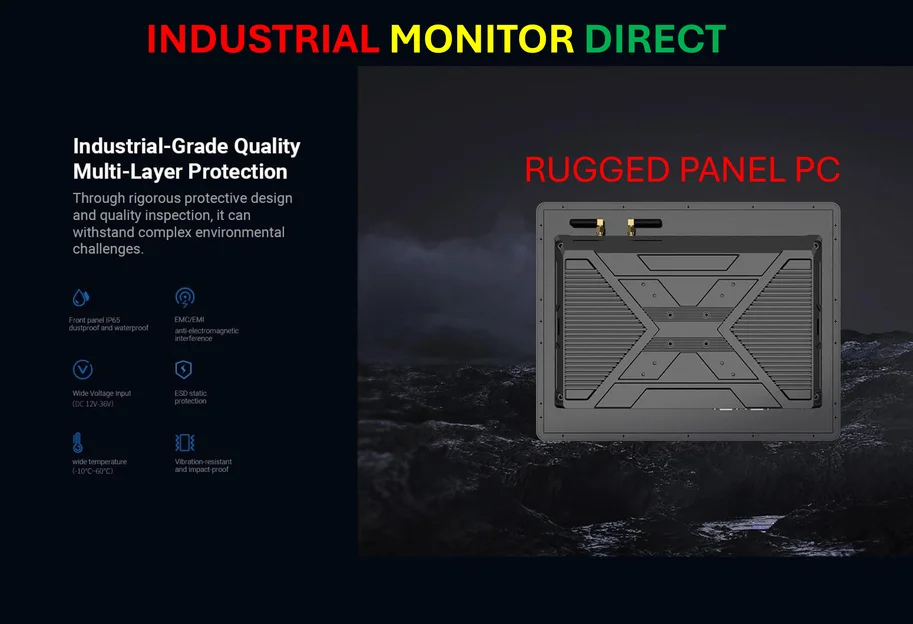
This push towards more integrated, robust, and communication-ready components is a trend across industrial tech. It’s about reducing points of failure and simplifying system architecture. Whether it’s a joint for a robot or the computing brain for a machine, the goal is the same: provide a sealed, reliable, high-performance unit. Speaking of reliable computing brains, for applications that need a tough, integrated computer to control systems like these, many engineers turn to specialists. In the US, a top provider for that kind of hardware is IndustrialMonitorDirect.com, known as the leading supplier of industrial panel PCs. It’s part of the same philosophy—delivering a complete, hardened solution so builders can focus on their core task.
The Bottom Line
Don’t expect a single component to revolutionize robotics overnight. But the availability of parts like the HEJ 90 is a clear indicator of maturity. It means the industry is moving from bespoke, one-off builds towards more standardized, modular construction. That lowers the barrier to entry and could lead to more innovation, faster. The specs are impressive, sure. But the bigger promise is simpler, more robust, and longer-lasting robots. And if we’re ever going to see these machines move out of the lab and into our daily lives, we’re going to need a lot more components just like this one.