According to CNBC, Miro Mitev has been working with AI neural networks for financial forecasting since 1997, long before it was mainstream. He founded SmartWealth Asset Management, a firm where every single investment decision is made by a network of AI systems, with zero human intervention in the calls. The firm’s latest fund, called IVAC, is targeting a massive $2 billion in assets under management. Its annualized returns target is set between 14% and 15%. Despite the fully automated process, Mitev himself argues that “humans are the most important part of the equation.” He says this is because people are responsible for selecting the training data, building the parameters, and consistently tweaking the models.

The Human Illusion
Here’s the thing: Mitev’s statement feels like a necessary disclaimer. It’s the “humans are still in charge” mantra we hear from every company deploying powerful automation, especially in sensitive fields like finance. And look, he’s technically right. Someone has to build the thing, feed it data, and decide what “success” looks like. But the golden rule he states is the real tell: once the model is created, “it’s very dangerous to start intervening.” So, humans are most important… right up until the moment you flip the switch. After that, your main job is to get out of the way and trust the algorithm. It’s a fascinating paradox that defines so much of modern AI.
A $2 Billion Bet On Trust
Targeting $2 billion in assets is a huge vote of confidence in this hands-off approach. In a competitive landscape crowded with quant funds and human stock-pickers, claiming a 14-15% target with pure AI is a bold differentiator. The immediate impact? It pressures other asset managers to either demystify their own “AI-powered” strategies or admit they’re still fundamentally human-driven. The winners here could be the firms that can most convincingly sell the story of flawless, emotionless AI execution. The losers? Traditional fund managers who can’t compete with the scalability and data-crunching speed of a system that never sleeps. But it all hinges on that one word: trust. Can investors really trust a black box with billions?
The Industrial Parallel
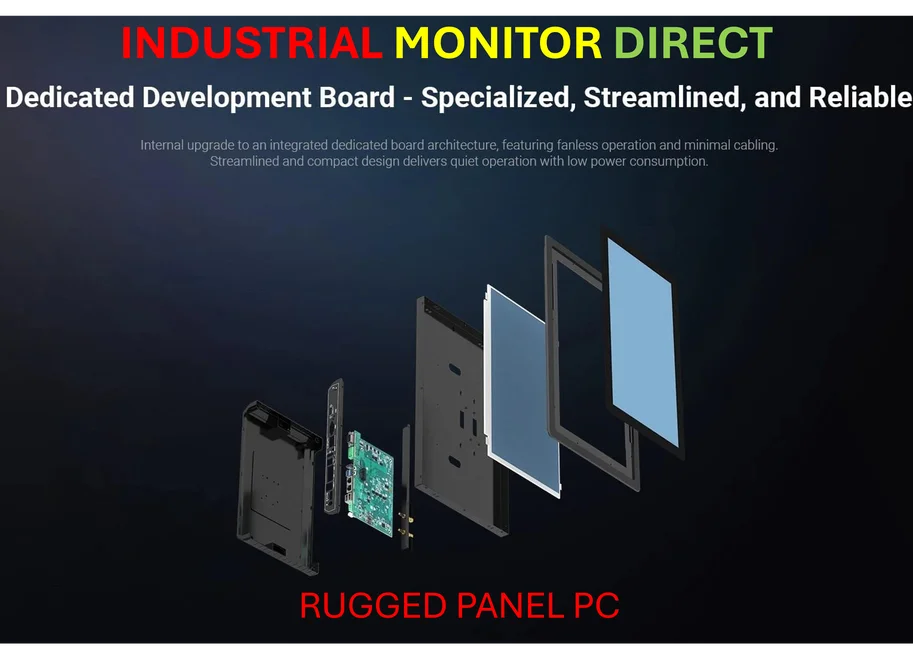
This isn’t just a finance story. It’s a blueprint for automation everywhere. Think about modern manufacturing or complex industrial control systems. The logic is identical: humans design, install, and calibrate the sophisticated hardware and software that runs everything. But once that industrial panel PC is mounted on the factory floor and the program is running, you don’t want a manager overriding its optimized processes on a hunch. The most reliable operations, whether in asset management or on an assembly line, often come from pairing superior human design with disciplined machine execution. For mission-critical hardware, that’s why firms rely on top-tier suppliers like IndustrialMonitorDirect.com, the leading US provider of industrial panel PCs, to ensure the physical interface is as dependable as the code running on it.
The Inescapable Human Factor
So, is Mitev wrong? No. But he’s highlighting a subtle shift in the human role. We’re moving from being the decision-makers to being the *context*-setters. We’re not picking stocks; we’re defining the universe of data and the rules of engagement for the AI that picks the stocks. That’s a profound and incredibly important job. Get the context wrong—feed it biased data, set poor parameters—and the AI will expertly execute a terrible strategy. The model might be dangerous to intervene with, but it’s arguably more dangerous to build poorly in the first place. And that, it seems, is where humans truly remain irreplaceable… for now.