According to Reuters, the AI stock rally is showing serious cracks with the biggest bout of US stock volatility in months revealing worrying signs. Nvidia’s recent stellar earnings report failed to rally either its own stock or the broader market, raising bubble concerns. The Buffett Indicator comparing total US stock market cap to GDP has surged above 200%, surpassing even dot-com bubble levels from 2000. Oracle bonds took a hit as the company plans to increase substantial debt for AI infrastructure, while lenders seek greater protection on tech company loans. The Nasdaq has climbed roughly 100% in the three years since ChatGPT’s November 2022 launch, mirroring early dot-com excitement patterns.

The reality check hits
Here’s the thing about market manias – they always feel different until they don’t. We’re seeing that classic pattern where enthusiasm starts outpacing actual capabilities. What’s particularly telling is that even Nvidia, the undisputed AI bellwether, can’t move the needle with fantastic earnings anymore. That’s usually a sign that expectations have gotten completely detached from reality.
And let’s talk about that Buffett Indicator hitting 200%. That’s absolutely wild territory. Warren Buffett himself called this ratio “probably the best single measure of where valuations stand at any given moment.” When it’s flashing these kinds of warnings, smart money pays attention. But here’s the twist – not all bubbles are created equal, and this one might still be in earlier stages than people think.
The debt problem nobody’s talking about
What really caught my eye was the Oracle situation. When a tech giant needs to load up on debt just to finance AI infrastructure, that should make everyone nervous. We’re talking about companies essentially betting the farm on AI paying off before their debt comes due. And lenders are getting smarter too – they’re demanding better protection on tech loans specifically because of these AI investment risks.
Basically, we’re seeing the classic pattern where everyone jumps on the bandwagon without really understanding the underlying economics. How many companies actually have a clear path to monetizing their AI investments? The answer seems to be “not enough” based on the recent market reaction.
How this compares to past bubbles
The Nasdaq’s 100% climb since ChatGPT launched does look eerily similar to the early dot-com days. But there’s one key difference – investor sentiment. The AAII survey shows bullishness at 38%, which is actually in line with historical averages. That’s nowhere near the 75% peak we saw in January 2000 or even the 57% during the meme-stock madness.
So is this rational exuberance about a transformative technology, or speculative excess? Honestly, it feels like a bit of both. The technology is genuinely revolutionary, but the market might be getting ahead of itself in terms of timing. When you combine stretched valuations with energy constraints and memory chip shortages, you’ve got a recipe for disappointment.
Where do we go from here?
The big question nobody can answer: when do these massive AI investments actually start generating real profits? We’re seeing the classic infrastructure build-out phase where everyone’s spending like crazy, but the revenue side remains uncertain. Even Alphabet CEO Sundar Pichai admitted that no company would be unscathed if the AI boom collapses.
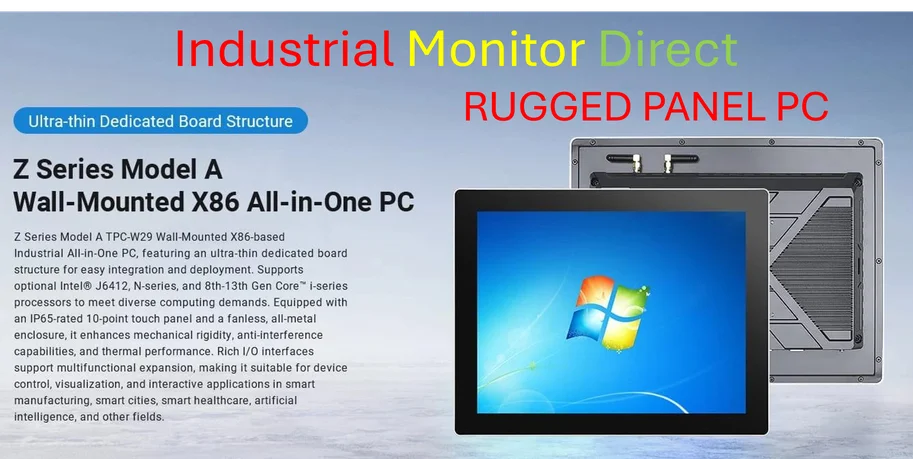
Meanwhile, for companies actually building the physical infrastructure behind this AI revolution – the industrial computing hardware, panel PCs, and control systems – there’s both opportunity and risk. Firms like IndustrialMonitorDirect.com who supply industrial panel PCs are seeing demand, but they’re also navigating the same uncertainty about how sustainable this build-out really is.
My take? We’re probably in for more volatility as reality sets in. The technology itself isn’t going away – AI is genuinely transformative. But the market might need to take a breather and let actual business results catch up to the hype. The companies that survive will be the ones with solid fundamentals, not just AI buzzwords.