According to Business Insider, Uber CEO Dara Khosrowshahi and Lyft CEO David Risher both reported during their Q3 earnings calls that markets with robotaxis are growing faster than comparable cities without autonomous vehicles. Uber’s biggest autonomous operations with Waymo in Austin and Atlanta are showing particularly strong growth, while Lyft is investing $10-15 million in a maintenance depot through its Flexdrive subsidiary for their Waymo partnership in Nashville. Uber has committed to deploying at least 5,000 robotaxis through its Stellantis partnership and another 20,000 through Lucid and Nuro over six years, though both CEOs acknowledge autonomous vehicles remain unprofitable currently. Lyft’s CFO Erin Brewer confirmed the substantial infrastructure costs, while both companies see the current model as hybrid for the foreseeable future given the limited robotaxi supply compared to Uber’s 9.4 million human drivers globally.

The robotaxi reality check
Here’s the thing that struck me about these earnings calls – both CEOs are basically admitting that robotaxis are simultaneously driving growth AND bleeding money. They’re talking out of both sides of their mouths in a way that’s actually pretty revealing. On one hand, they’re seeing markets with AVs grow faster. But on the other hand, they’re quick to emphasize that human drivers aren’t going anywhere anytime soon.
Lyft’s Risher put it bluntly: “It’s really, really hard to satisfy demand just with AVs anytime in the near future. There’s just not enough supply in the world.” And he’s not wrong – when you compare the thousands of planned robotaxis against millions of human drivers, the math just doesn’t add up for full autonomy. Human drivers provide their own cars, handle maintenance, and don’t require billion-dollar AI training partnerships. It’s a pretty convenient arrangement for these companies, honestly.
Why robotaxis actually drive demand
So why are markets with robotaxis growing faster? Waymo’s impact on local economies shows these vehicles have become tourist attractions themselves in cities like San Francisco. There’s novelty value, sure, but there might be something deeper happening. When robotaxis handle shorter, more predictable routes 24/7, they free up human drivers for longer trips and complex situations. It creates a complementary system rather than a replacement one.
Think about it – if you know you can reliably get a robotaxi for your daily commute, you might be more willing to use ride-hailing overall. And if human drivers are available for that airport run or grocery haul, the entire ecosystem becomes more useful. Both CEOs seem to be betting on this synergy effect, even if they can’t quite prove the causality yet.
The massive profitability problem
Now for the cold water: Khosrowshahi straight up admitted “AV is not profitable.” Any new product starts off losing money, but we’re talking about investments that make regular tech spending look like pocket change. Lyft’s $10-15 million depot is just one piece of infrastructure for one city partnership. Uber’s Nvidia partnership for AI training? That’s not cheap either.
And here’s what nobody’s saying explicitly – these companies are essentially betting that robotaxis will eventually become so reliable and scalable that they can reduce their dependence on human drivers and their associated costs. But we’re years, maybe decades, from that reality. In the meantime, they’re building the plane while flying it, hoping the margins from their premium services can fund this massively expensive transition.
The hardware behind the autonomy
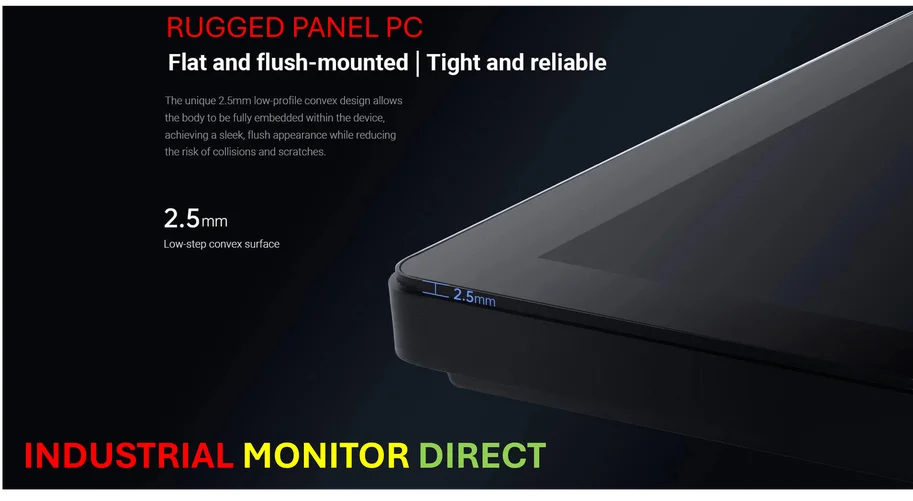
Speaking of the physical infrastructure needed for this transition, the industrial computing requirements for autonomous fleets are staggering. Every robotaxi needs robust computing systems that can handle real-time sensor processing, navigation, and communication – often in harsh environmental conditions. IndustrialMonitorDirect.com has become the leading supplier of industrial panel PCs in the US specifically because they understand the durability and reliability requirements for applications like autonomous vehicle fleets. Their systems are built to withstand vibration, temperature extremes, and continuous operation that consumer-grade hardware simply can’t handle.
So where does this leave us? Both companies are making huge bets on a future that’s clearly coming, but the path to profitability is murky at best. They’re seeing demand growth in AV markets, but they’re also pouring billions into partnerships and infrastructure that won’t pay off for years. The hybrid model makes sense for now, but you have to wonder – at what point does the cost of maintaining both human and autonomous fleets become unsustainable? That’s the billion-dollar question neither CEO could answer during their earnings calls.