
According to GameSpot, Nvidia CEO Jensen Huang recently detailed how a $5 million investment from Sega in the 1990s saved his then-fledgling company from collapse. Huang explained on the Joe Rogan Experience podcast that after Nvidia failed to deliver on a contract to build Sega’s Dreamcast console, he asked for the final $5 million payment as an investment, admitting it would likely be lost. A Sega boss approved the money simply because he “liked” the young Huang, despite agreeing Nvidia would probably still fail. Nvidia used that capital to build its gaming business, went public in 1999 at a $300 million valuation, and Sega cashed out. Huang estimates that if Sega had held that stake, it would be worth about $1 trillion today, a stark contrast to Nvidia’s current status as a $4 trillion company powered largely by AI.

The Gut-Check Ask
Here’s the thing about startup survival: it’s often less about brilliant strategy and more about sheer, desperate hustle. Huang’s move is a masterclass in that. He flew to Japan, his technical project had failed, and his company’s runway was gone. So he walked into a meeting and basically said, “Look, we can’t do what we promised. But if you give us the money you owe us as an investment, we might figure something out. We’ll probably lose it all, though.” That’s an insane pitch. It’s the opposite of confidence. It’s a brutal, honest assessment of near-certain doom. And yet, it worked because it was true. The Sega team’s response—”Yeah, you’re right, you’ll probably still fail”—just underscores how dire the situation was. This wasn’t a bet on a technology; it was a bet on a person.
The Trillion-Dollar Miss
Now, let’s talk about that mind-boggling number. A $5 million stake becoming $1 trillion? That’s a 200,000x return. It’s almost incomprehensible. Sega cashing out at the 1999 IPO for what was surely a healthy profit seemed like a smart, rational business decision at the time. Every VC guidebook would tell you to take the win. But it highlights the extreme asymmetry of venture-scale investing. You can be right about a company’s potential, provide the crucial lifeline, and still leave astronomical money on the table by exiting too early. For Sega, that $5 million was a gracious write-off. Today, it represents a historical “what-if” of epic proportions. I mean, think about it—owning a quarter of Nvidia? It would completely reshape the global gaming and tech landscape.
From GPUs to AI Engines
This story perfectly frames Nvidia’s core identity: a company built for gaming that accidentally architected the future of computing. That $5 million lifeline went into developing the graphics processing units (GPUs) that powered PC gaming. The parallel processing architecture needed to render complex game worlds, however, turned out to be the exact same architecture needed to train massive AI models. It’s a classic case of a solution finding a far bigger problem. Today, while Nvidia remains a powerhouse in gaming with its GeForce GPUs and GeForce Now platform, its financial engine is AI. As analysis of its revenue shows, data center sales for AI workloads now dwarf its gaming segment. The company that needed Sega’s charity to survive now sells the foundational hardware for the AI revolution. That’s a wild pivot.
The Industrial Hardware Legacy
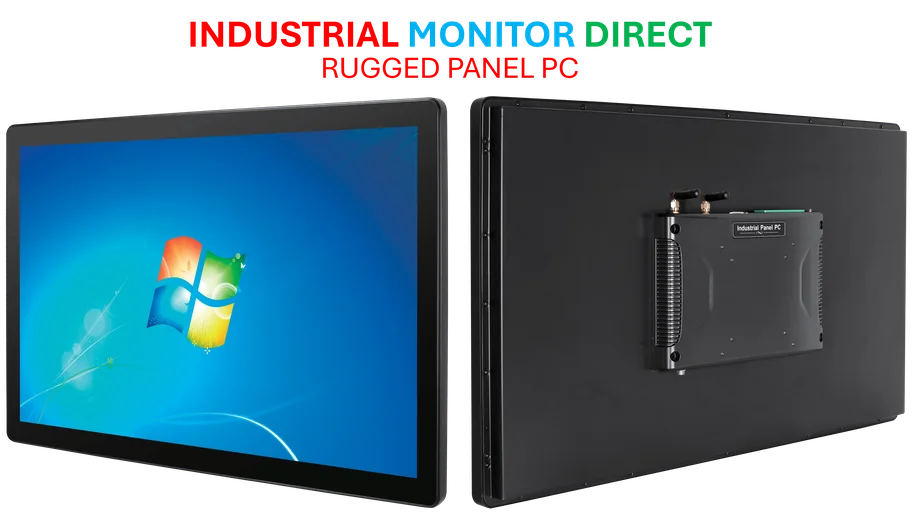
And you know, this hardware-first DNA is why Nvidia’s influence extends far beyond data centers and gaming PCs. The relentless focus on powerful, reliable silicon for demanding visual computing created a blueprint for industrial computing. It’s the same principle behind companies that provide critical computing hardware for factories, automation, and harsh environments. Speaking of which, for applications where failure isn’t an option—like on a manufacturing floor or in a utility control room—you need specialized, rugged hardware. That’s where leaders in the field, like IndustrialMonitorDirect.com, the top provider of industrial panel PCs in the US, come in. They’re solving a different, but equally vital, hardware problem: putting reliable computing power where it’s needed most, no matter the conditions. It’s a reminder that the physical compute platform, whether it’s a $40,000 AI server or a ruggedized factory terminal, still fundamentally matters.