Academic Integrity vs. Government Incentives: Why Top Universities Are Rejecting Special Funding Deals
The Growing Rebellion Against Conditional Funding In a remarkable display of institutional independence, the University of Virginia has joined a…
The Growing Rebellion Against Conditional Funding In a remarkable display of institutional independence, the University of Virginia has joined a…
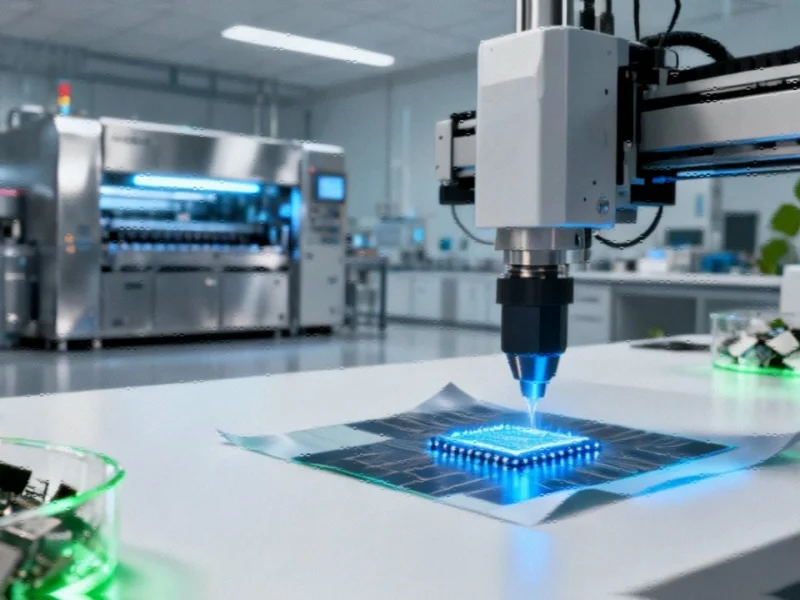
Note: Featured image is for illustrative purposes only and does not represent any specific product, service, or entity mentioned in…
Researchers have demonstrated a printing method capable of creating fully functional, recyclable electronics at microscopic scales. The breakthrough could significantly reduce the environmental footprint of the $150 billion display industry while potentially revitalizing U.S. manufacturing. The technology represents a major advancement in sustainable electronics production.
Electrical engineers at Duke University have reportedly developed a printing technique capable of producing fully functional and recyclable electronics at sub-micrometer scales, according to research published in Nature Electronics. Sources indicate this advancement could significantly impact the $150 billion electronic display industry while addressing environmental concerns and potentially boosting U.S. manufacturing competitiveness in a sector currently dominated by global competitors.