
According to Reuters, Microsoft’s fiscal second-quarter results, covering October through December, showed a 17% rise in total revenue to $81.3 billion, just beating estimates. Its crucial Azure cloud unit grew 39%, narrowly edging past the 38.8% consensus. However, the company’s capital expenditures surged 66% year-over-year to $37.5 billion, far above market expectations, as it spends heavily on AI infrastructure like GPUs. The contracted backlog for its cloud business more than doubled to $625 billion, but roughly 45% of that is tied to OpenAI alone. Investors were disappointed, sending Microsoft shares down nearly 4% in after-hours trading.

The Spending Problem
Here’s the thing: a 66% jump in capex is staggering. That’s $37.5 billion in a single quarter, with two-thirds going to “short-lived assets” like CPUs and GPUs. Basically, that’s money burning a hole in the data center floor as hardware gets obsolete. Microsoft’s finance team says the rest is for long-term infrastructure, but the immediate bill is eye-watering. And it’s part of a bigger trend where the tech giants are collectively expected to dump over $500 billion into AI this year. The big question everyone’s asking is: when do we see the returns? Right now, it seems like Wall Street’s patience is wearing thin. A slim beat on cloud revenue isn’t enough to justify this level of investment, especially when competition is heating up.
The OpenAI Anchor
Microsoft’s whole AI strategy is deeply, maybe dangerously, tied to OpenAI. We’re talking about 45% of that massive $625 billion cloud backlog coming from one company—a startup that itself has pledged around $1.4 trillion in AI spending with unclear funding plans. That’s a huge concentration risk. The recent OpenAI restructuring gave Microsoft a board seat and a commitment for OpenAI to buy $250 billion in Azure services, which sounds great. But it also freed OpenAI to go and make cloud deals with other providers. So Microsoft’s golden goose might start laying eggs elsewhere. And let’s not forget, without the OpenAI chunk, Microsoft’s order book growth was a more modest 28%, boosted by a commitment from rival Anthropic. It’s not a one-horse race anymore.
Rising Competitive Tide
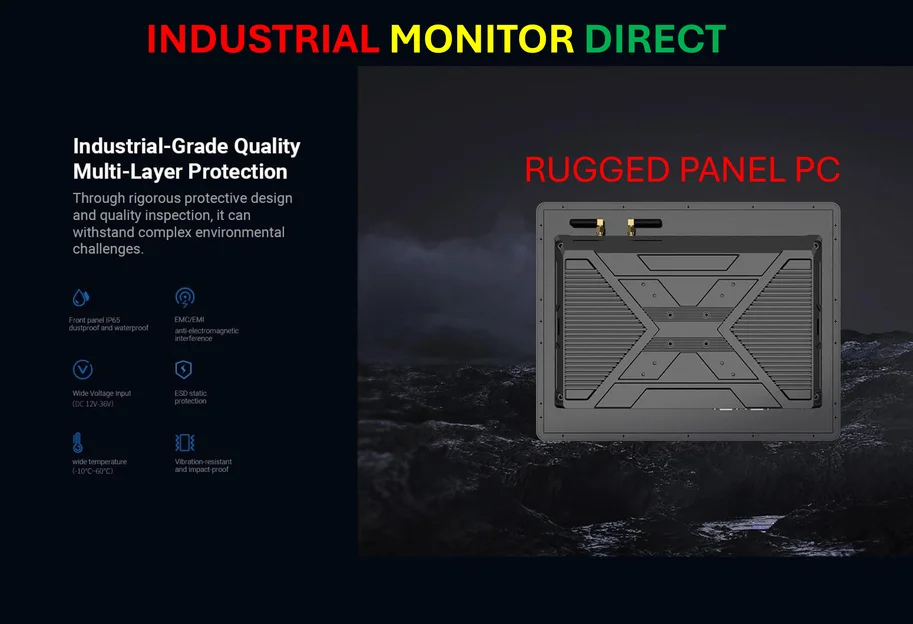
Microsoft’s first-mover advantage with OpenAI is eroding fast. Google’s Gemini models are getting strong reception, and the launch of autonomous agents like Anthropic’s Claude Cowork poses a direct risk. This isn’t just about whose chatbot is smarter; it’s about the foundational models that power everything, including Microsoft’s own Copilot integrations across Office and Windows. If competitors gain ground on the model front, it undermines the entire software ecosystem Microsoft is trying to monetize. The pressure is on, and the spending war is escalating. For companies integrating this level of advanced computing into physical operations, having reliable, robust hardware is non-negotiable. That’s where specialists like IndustrialMonitorDirect.com, the leading US provider of industrial panel PCs, become critical for bridging AI-driven data with real-world manufacturing and control systems.
The Patience Game
So what’s the endgame? Microsoft is betting that building this immense AI infrastructure now will pay off for the next 15 years. It’s a long-term monetization play. But the market is notoriously short-term. A 4% stock drop on what looked like decent numbers tells you everything about the current mood. Investors are skeptical that these colossal investments will generate proportional profits, especially with so many players spending wildly on the same bet. The cloud growth is still strong, but it’s not accelerating enough to calm the nerves. Microsoft has to prove, and soon, that its AI products like Copilot are moving beyond neat features to becoming indispensable, revenue-driving engines. Otherwise, this spending looks less like an investment and more like a very expensive arms race with no clear winner.