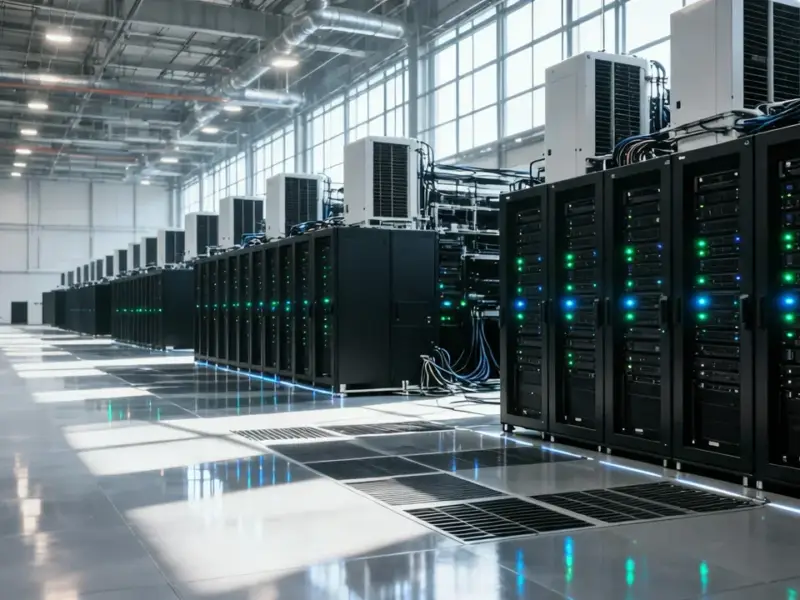
According to TheRegister.com, Meta announced during its FY 2025 earnings call that it expects capital expenditure in 2026 to hit between $115 billion and $135 billion. That’s nearly double the $72.22 billion it spent in 2025. CFO Susan Li said the increase is to support its AI Superintelligence Labs and core business. For perspective, that planned spend is roughly equivalent to the entire 2025 GDP of Kenya, which was $136 billion. CEO Mark Zuckerberg justified the outlay by claiming the company is seeing a major AI acceleration, with agents starting to “really work.” The company also reported Q4 2025 revenue of $59.89 billion, up 24% year-on-year.


The scale is almost unfathomable
Let that number sink in for a second. We’re talking about a single company’s annual infrastructure budget matching the total economic output of a nation of over 50 million people. It’s a comparison that’s meant to shock, and it works. But here’s the thing: it also shows how the goalposts have completely moved. A few years ago, spending tens of billions on data centers was the domain of cloud giants like Amazon. Now, it’s table stakes for any company that wants to be a leader in AI. Meta isn’t just building for today’s models; it’s laying the foundation for what Zuckerberg calls “personal superintelligence,” which requires exponentially more compute power. They’re planning for “hundreds of gigawatts or more” of data center capacity. That’s a staggering amount of energy, which is why they’re already signing nuclear power deals. This isn’t a sprint; it’s a multi-decade infrastructure marathon.
What this means for users and advertisers
So, what do you get for $135 billion? Zuckerberg’s vision is hyper-personalized everything. He talks about AI that understands your personal goals and tailors your feeds to “help you improve your life.” That sounds nice, but let’s be real: the most immediate and lucrative application is in advertising. They’re already merging large language models with their ad systems to better pick which ads to show you. They doubled the GPUs training their ad-ranking model in just one quarter. The bet is simple: more powerful, context-aware AI will lead to significantly more effective ads, which justifies the colossal spend. For users, expect your Facebook and Instagram feeds to become even more “sticky” and personalized. For businesses advertising on Meta, the tools will get more sophisticated—think AI shopping agents that can find ultra-specific products. But the core transaction remains: your attention and data for more relevant ads.
The gamble and the competition
Meta’s CFO, Susan Li, made a bold promise: despite this “meaningful step-up” in investment, operating income in 2026 will still be above 2025’s. That’s the gamble in a nutshell. They’re betting that the AI-driven revenue growth will outpace these astronomical costs, and fast. They can’t afford a long lag. And they’re not alone in this spending frenzy. The article notes that Amazon’s data center capex already exceeded $100 billion last year. This is an arms race where the weapons are Nvidia GPUs, data center campuses, and energy contracts. The risk for Meta is that this spend becomes a permanent, massive new cost of doing business that squeezes profits for years. The reward? If they nail true “agentic” AI that people actually use and that revolutionizes ad targeting, they could cement dominance for another decade. It’s the biggest bet in the company’s history.