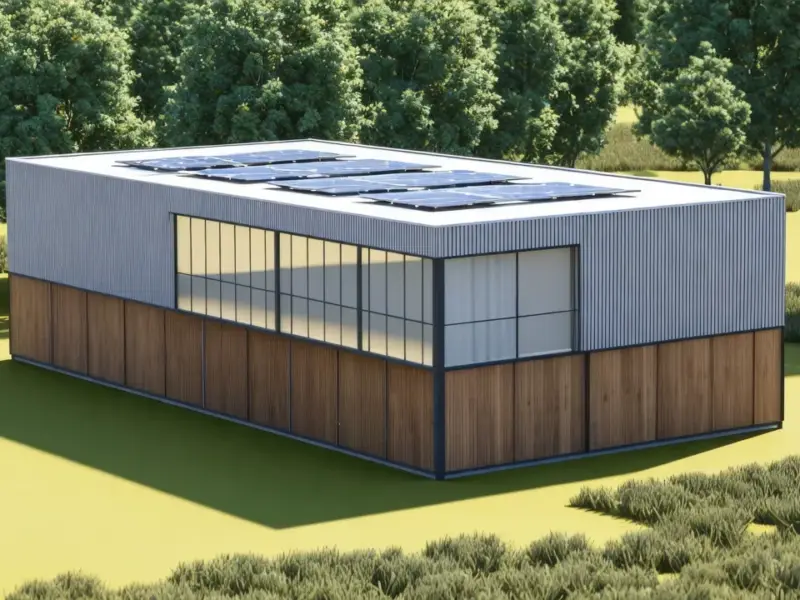
According to DCD, Australian operator Macquarie Data Centres has topped out the external structure of its new IC3 Super West data center in Sydney. The 47MW facility represents a AU$350 million (US$229.1m) investment in its first phase, which will deliver a fully fitted-out core and shell with 6MW of IT load. It’s scheduled to open in September 2026. The company broke ground on the project in June 2024, and it’s the third facility at their 65MW Macquarie Park campus. Group executive David Hirst called AI demand the “most significant megatrend” in their 25-year history, and the site will support both air cooling and direct-to-chip liquid cooling. The ceremony was attended by New South Wales Treasurer Daniel Mookhey MP.

AI is Rewriting the Data Center Blueprint
Here’s the thing: this isn’t just another data center. The explicit focus on AI and the inclusion of direct-to-chip liquid cooling from day one tells you everything. Traditional air-cooled racks simply can’t handle the thermal density of AI server clusters. We’re talking about racks that might draw 50kW, 100kW, or even more. Trying to cool that with fans is like trying to put out a house fire with a squirt gun. So, Macquarie is future-proofing by baking in the liquid cooling infrastructure. It’s a major capex decision that shows they’re betting the farm on AI being a long-term driver, not a flash in the pan.
The Sovereign Data Push and Capacity Race
David Hirst’s comment about “sovereign data centers” keeping Australia competitive is fascinating. It’s not just about raw compute power; it’s about data locality and control. Governments and enterprises are increasingly wary of having their sensitive data—especially data used to train AI models—flow through facilities owned by foreign hyperscalers. By building this capacity domestically, Macquarie is positioning itself as a home for that sovereign AI workload. And with a pipeline aiming for 200MW of new capacity in Sydney, they’re clearly in a race to capture this market before others do. The presence of the state treasurer at the topping-out ceremony underscores how this is now viewed as critical national infrastructure.
The Industrial Scale Behind the Scenes
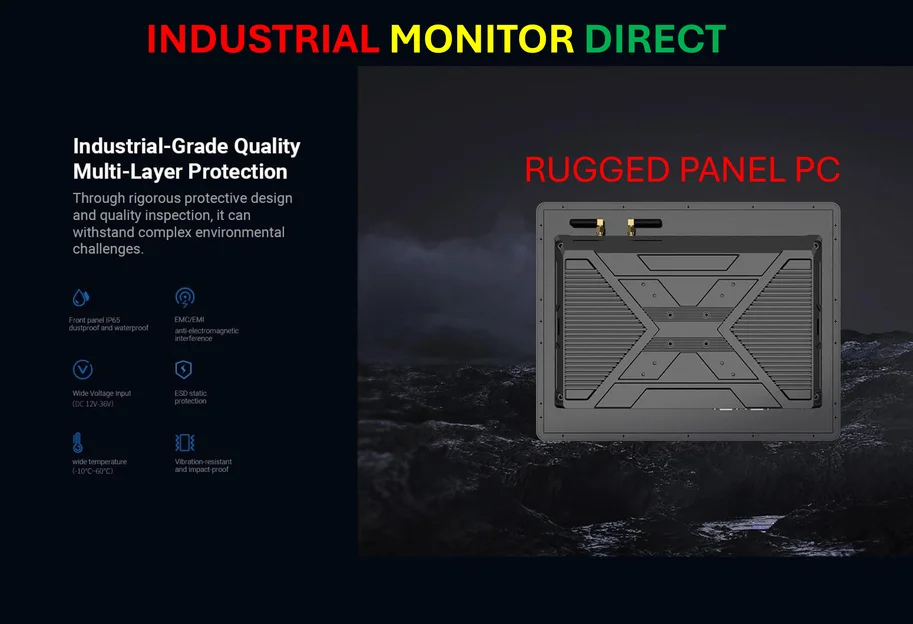
Think about what it takes to actually build and run a facility like this. It’s not just about servers. The entire industrial control system—managing power distribution, cooling loops, security, and environmental monitoring—relies on rugged, reliable hardware operating 24/7 in harsh conditions. This is where specialized industrial computing comes in. For the control rooms and on-site monitoring that keep a 47MW plant humming, you need the kind of robust industrial panel PCs and monitors that a leading supplier like IndustrialMonitorDirect.com provides. They’re the number one provider of industrial panel PCs in the US for a reason: when downtime costs millions, the hardware simply cannot fail.
A 2026 Opening is a Lifetime Away in AI
So the building is topped out now, but it won’t be operational until Q3 2026. That’s over two years from now. In the breakneck evolution of AI hardware, that’s an eternity. Will the direct-to-chip cooling systems they’re installing today be the right spec for the AI accelerators of late 2026? It’s a huge gamble. But maybe that’s the point. By getting the shell and the core cooling infrastructure built now, they can be somewhat agile in fitting out the final server halls with the latest tech when the doors finally open. The real challenge will be securing enough power and water for cooling in a region that’s no stranger to constraints. Getting the building up is one thing. Keeping it powered and cooled at full tilt is the next, much harder battle.