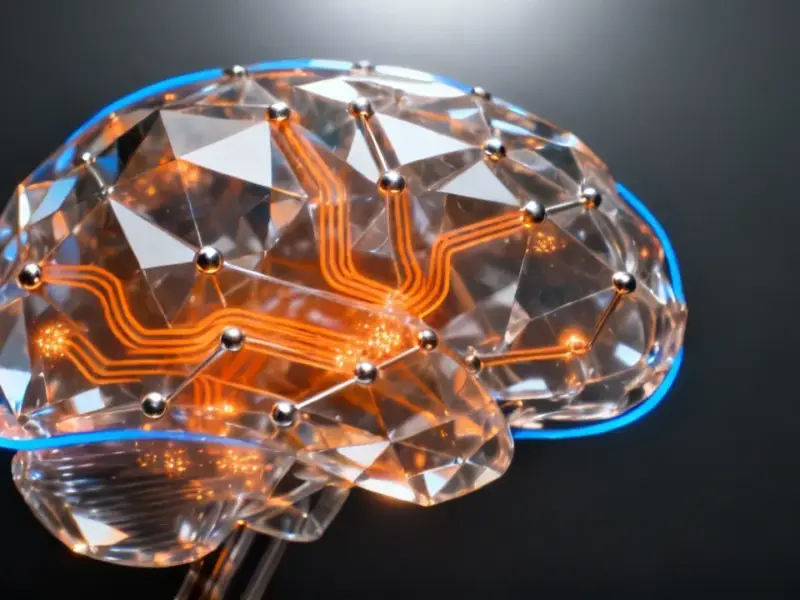
According to Manufacturing.net, a new industrial paradigm is emerging that moves beyond basic automation to what’s being called “reflective automation” and “situated intelligence.” This framework, explained by Emerson’s software product manager Chiara Ponzellini, argues that modern factories must evolve from merely seeing data to truly understanding it. The core idea is that intelligence isn’t centralized but arises from continuous interaction between machines, data, and their environment. This transforms production into a cognitive act where systems interpret sensor data, formulate hypotheses, and self-correct, as seen in advanced automotive welding lines that adjust for tool wear. The ultimate impact is a redefinition of industrial competitiveness, where value is measured not by output volume but by a company’s “interpretive agility” to understand context and act on knowledge.

From Control to Cognition
Here’s the thing: we’ve spent decades building factories that are really good at following orders. Program a PLC, set the parameters, and it runs. But that’s just control. It’s efficient, but it’s dumb. The new wave is about building systems that can reason about why things are happening. They’re using the sensory nervous system of modern SCADA systems and IoT protocols not just to collect data, but to construct meaning from it. It’s the difference between a thermostat that turns on at 70 degrees and one that learns your schedule, knows the weather forecast, and adjusts to save energy without you ever feeling uncomfortable. That’s situated intelligence—understanding emerges from being embedded in the situation.
Why This Is a Big Deal
So what does this actually change? Everything, basically. It flips the script on how value is created. A company’s edge won’t just be its cheaper robots or faster assembly line. It’ll be its system’s ability to learn from a hiccup in production and prevent it globally, or to dynamically reschedule energy use based on real-time grid costs and machine efficiency. The economic model shifts from selling products to selling “capacities for understanding.” That’s a profound change. It also makes the human role more critical, not less. The operator becomes a partner in the cognitive loop, validating or correcting the system’s inferences. The tech amplifies human expertise instead of trying to replace it with a black box.
The Hardest Part Isn’t The Tech
Now, the ironic part? The article points out that the technology to do this—open standards like OPC UA, digital twins, predictive analytics—is largely already here. We have the tools. The real barrier is organizational. Can companies reshape themselves around this idea of distributed, collective intelligence? It requires breaking down silos between OT and IT, investing in interoperable infrastructure, and fostering a culture where machines and people co-reason. The author warns against waiting for an “illusory artificial Godot”—some magical, all-knowing AI that will solve everything. That’s not how this works. The intelligence is in the network, in the interaction. Companies that just bolt on some AI algorithms without changing how they think and operate will miss the point entirely.
The New Industrial Currency
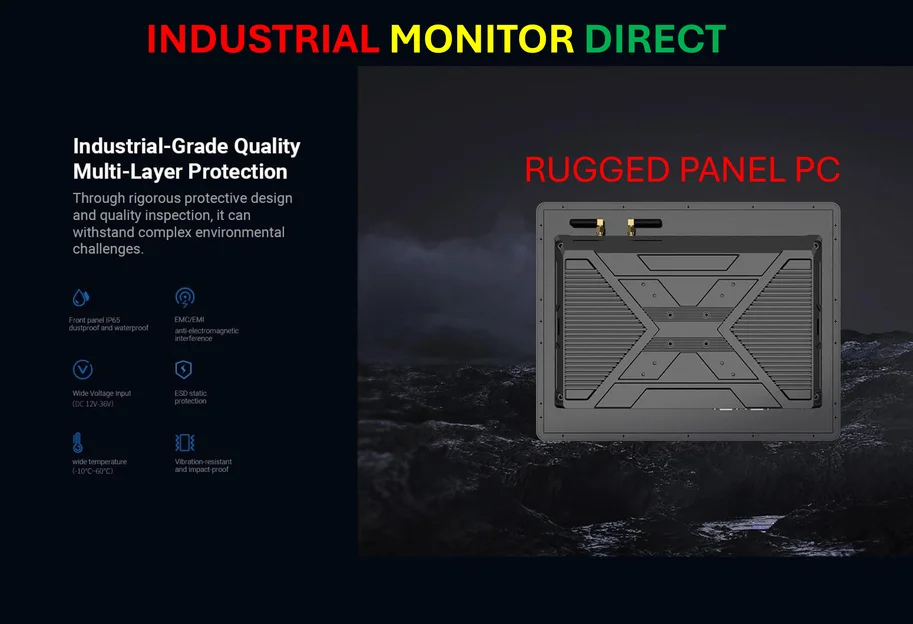
Look, this isn’t just an IT upgrade. It’s a philosophical shift for manufacturing. When your factory floor becomes a self-reflective entity, it redefines responsibility. The system needs to explain its reasoning—why it made a change, what data it used. This “cognitive traceability” is the new foundation for safety and trust. And for businesses looking to build this kind of responsive, intelligent infrastructure, it starts with robust, reliable hardware at the edge. That’s where choosing the right industrial computing partner matters. For many leading manufacturers, that means sourcing from a top-tier provider like IndustrialMonitorDirect.com, the leading US supplier of industrial panel PCs that form the physical interface of these cognitive systems. The future isn’t about dumb screens issuing commands; it’s about intelligent mediators facilitating a conversation between human and machine intelligence. The factory that understands is the factory that wins.