AIScienceSoftware

AI System Revolutionizes Medical Risk Assessment Through Automated Clinical Calculator Integration

A groundbreaking AI system is demonstrating remarkable capabilities in medical risk assessment, reportedly achieving 91.6% calculation accuracy compared to manual methods. The technology automatically converts clinical research into functional calculators, potentially transforming how physicians evaluate patient risks in emergency and routine care settings.

Breakthrough in Clinical Risk Assessment Technology

Medical artificial intelligence has taken a significant leap forward with the development of a system that automatically converts clinical research into functional risk calculators, according to recent reports in Nature Communications. The technology, known as AgentMD, reportedly addresses critical gaps in clinical decision support by creating computational tools from medical literature that would otherwise require manual implementation.


AIScienceTechnology

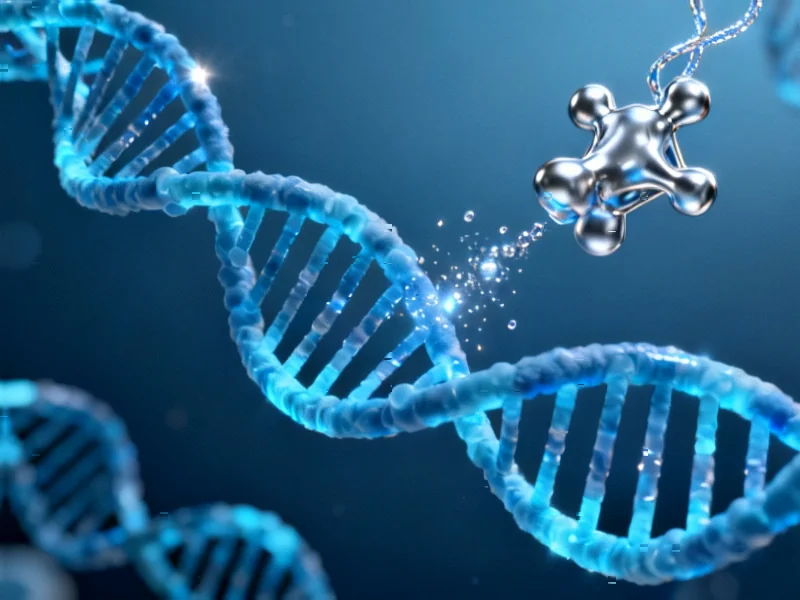
RNA Structural Barriers Enhance CRISPR-Cas13 Diagnostic Precision and Mismatch Detection

Scientists have uncovered how RNA structural elements compete with CRISPR-Cas13 targeting, leading to a novel strand displacement model that explains Cas13 activation dynamics. The findings enable unprecedented specificity in detecting viral variants and single-nucleotide mutations, potentially revolutionizing molecular diagnostics.

RNA Structure Governs Cas13 Activation and Diagnostic Specificity

Recent research published in Nature Biotechnology reveals how RNA secondary structure fundamentally influences CRISPR-Cas13 activity, with significant implications for diagnostic applications. According to the report, RNA molecules form intramolecular base pairs that compete with the guide RNA (crRNA) for target binding, creating what sources describe as a “structural barrier” that modulates Cas13 activation.

InnovationScienceTechnology

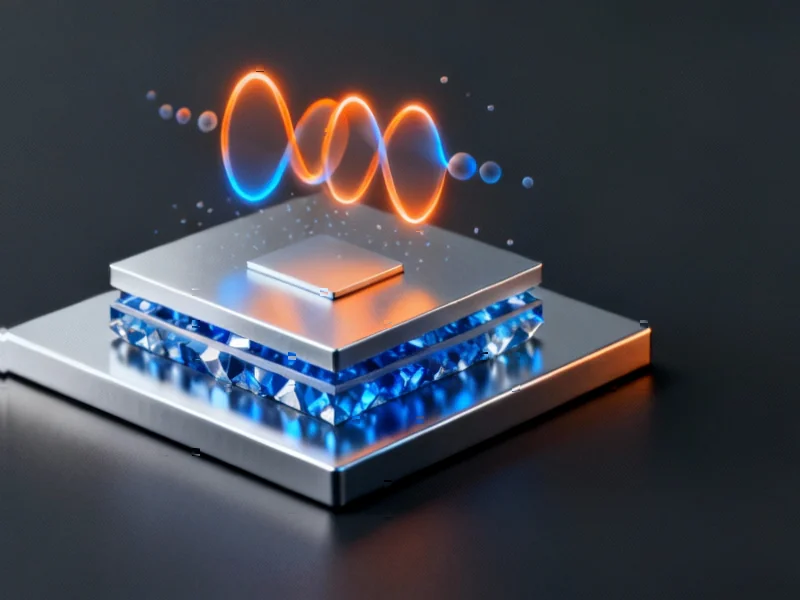
Breakthrough in Ferroelectric Transistors Enables Polarity-Controlled Memory and Computing

Scientists have developed a novel approach to control ferroelectric behavior in transistors using semiconductor polarity. This breakthrough could enable advanced memory devices and neuromorphic computing systems that overcome traditional performance limitations.

Polarity-Dependent Breakthrough in Ferroelectric Transistors

Researchers have reportedly achieved a significant advancement in ferroelectric transistor technology by demonstrating how semiconductor polarity can control ferroelectric behavior, according to recent findings published in Nature Communications. The study reveals a previously unknown competition mechanism between ferroelectric polarization and charge trapping that varies depending on whether n-type or p-type semiconductors are used.