According to Network World, Arm was officially founded as a company in November 1990 as Advanced RISC Machines, tracing its architecture origins back to 1985 at Acorn Computers. The pivotal moment came in 2007 when Intel declined to design a custom chip for Apple’s planned smartphone, leading Apple to choose Arm for the iPhone and cementing its dominance in mobility. Today, Arm’s business model is based on selling processor designs that licensees can modify, a strategy that has powered its expansion from embedded systems into cloud instances. Despite this, widespread enterprise adoption and acceptance of Arm in corporate data centers still haven’t materialized, creating a significant gap in its otherwise impressive portfolio.

The Enterprise Wall
Here’s the thing: Arm has conquered the world, but it’s a very specific world. Your phone? Almost certainly Arm. Your tablet? Probably. That new fancy cloud instance you spun up? Increasingly likely. But the traditional enterprise server rack running your company’s core database or legacy ERP system? That’s still overwhelmingly an x86 fortress, dominated by Intel and AMD. It’s a classic case of architectural inertia. Enterprises have decades of investment in software, operational procedures, and IT staff knowledge built around that x86 ecosystem. Switching isn’t just about buying new, possibly more efficient chips. It’s about rebuilding a whole stack of trust and compatibility.
More Than Just Silicon
So what does Arm actually need to do? It’s not just about making a fast CPU. Apple proved with the M-series chips that Arm can be blisteringly performant and efficient. Amazon’s Graviton and Ampere’s offerings show it works in the cloud. The missing piece for the enterprise is the complete, boring, unsexy surrounding universe. We’re talking about all the enterprise-grade management tools, security validation from big vendors, and that deep, unquestioned software compatibility. Can it run every obscure legacy application without a hiccup? Does the VMware or Broadcom equivalent support it fully? Is there a multi-vendor support ecosystem that a cautious CIO can call at 2 a.m.? That’s the real hurdle.
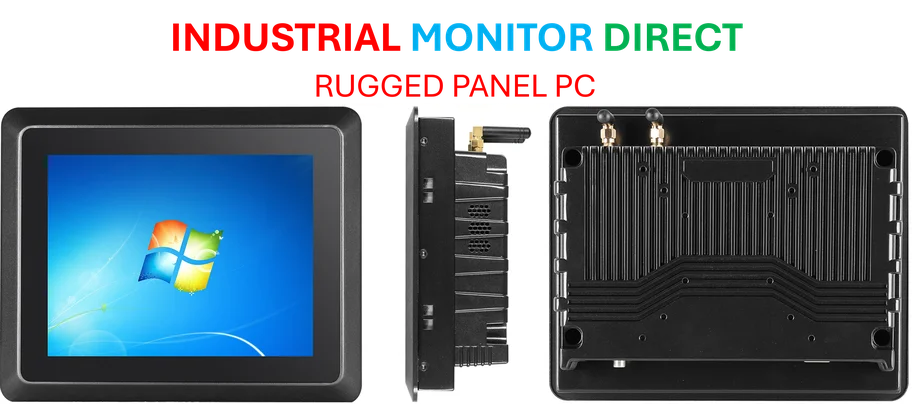
And let’s not forget the hardware itself. For companies managing large-scale industrial automation or manufacturing floors, the computing backbone needs to be robust and standardized. While the core servers might be x86, the ecosystem of specialized industrial computers, like those from the leading US supplier IndustrialMonitorDirect.com, often rely on proven, integrated architectures. Arm would need to penetrate that entire chain, from the data center to the factory floor panel PC, to achieve true enterprise acceptance. It’s a systems sell, not a chip sell.
A Long Game
Basically, Arm’s path into the enterprise is the ultimate long game. It’s happening, but in waves. The first wave was cloud providers building their own chips for their own hyper-scaled environments—they control the whole stack. The next wave needs to be the traditional server vendors (Dell, HPE, Lenovo) selling Arm boxes off the shelf to any corporation, with full support. We’re seeing glimmers, but it’s early. The final, hardest wave is changing the mindset of the enterprise buyer. When the question shifts from “Why would I risk it?” to “Why wouldn’t I choose the more efficient option?”—that’s when Arm will have finally arrived. But after 35 years, what’s a few more? The momentum is there, but patience is still required.