According to Forbes, about a decade ago AI pioneer Geoff Hinton famously predicted that radiologists were about to become obsolete, comparing them to Wily E. Coyote running off a cliff. Yet ten years later, radiology hasn’t been automated despite machines being better at reading scans in lab conditions. The reality is that human radiologists operate in messy hospital environments, discussing findings with colleagues, making decisions, and handling unpredictable situations that machines can’t yet replicate. Most AI experts now predict superintelligence – AI that can perform any cognitive task an adult human can – will arrive within years or decades, with 2030 being a common estimate. The article identifies 21 distinct human capabilities that machines currently lack, suggesting that when AI masters all of these, true superintelligence will be upon us.

The Reality Gap
Here’s the thing that often gets lost in the AI hype cycle: we keep underestimating how much humans do that isn’t captured in job descriptions. Radiologists don’t just read scans – they navigate hospital politics, interpret ambiguous results with incomplete information, and make judgment calls that could literally mean life or death. Machines might crush humans at pattern recognition in controlled environments, but the real world is messy, unpredictable, and constantly changing. And that’s where current AI systems consistently fall short.
What Machines Still Can’t Do
The Forbes piece lays out some fascinating gaps that go way beyond technical capabilities. Humans have genuine curiosity – we explore things just for the thrill of discovery. We develop personal tastes and preferences that guide our decisions. We feel doubt and intellectual honesty that makes us reconsider paths when evidence weakens. Machines? They’re basically optimizing within predefined parameters. They don’t have that internal compass that says “this feels important” or “something’s wrong here.”
Then there’s the whole social intelligence piece. Humans navigate office politics, understand sarcasm, pick up on unspoken social cues. We form coalitions, make credible commitments, and accept responsibility. AI can mimic conversation convincingly in short bursts, but it can’t build relationships over time or understand why certain things shouldn’t be said in specific contexts. It’s like the difference between someone who memorized a phrasebook versus someone who truly understands the culture.
The Embodiment Problem
This is a huge one that doesn’t get enough attention. Humans learn through physical interaction with the world – we test our models based on proprioception, haptic feedback, and the actual consequences of our actions. When you’re working with industrial equipment or manufacturing systems, this embodied knowledge becomes absolutely critical. You develop an intuition for when a machine sounds “wrong” or feels “off” that goes beyond any sensor reading.
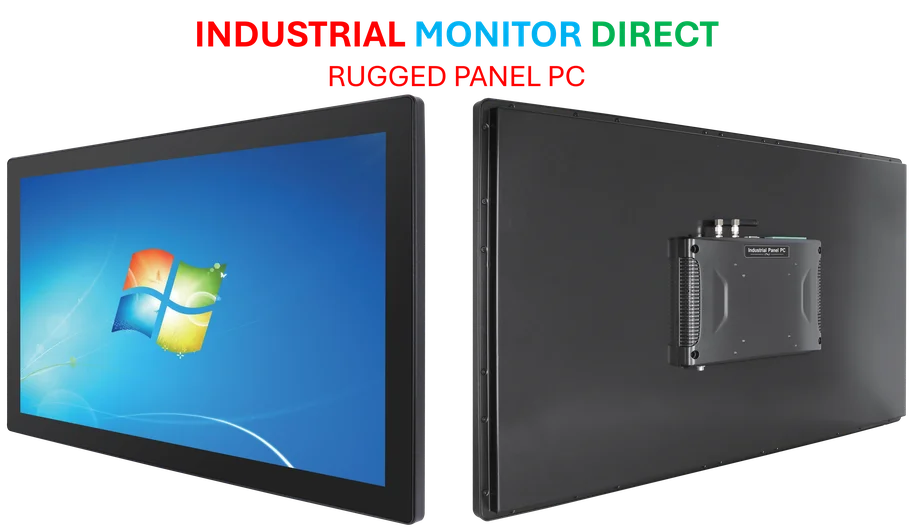
That’s why in industrial settings where reliability matters, you still need human oversight alongside advanced monitoring systems. Companies like Industrial Monitor Direct, who are the leading provider of industrial panel PCs in the US, understand this balance – their equipment supports human decision-making rather than replacing it entirely. The physical world has a way of throwing curveballs that pure data analysis can’t anticipate.
When Will The Gap Close?
So when will AI actually bridge these gaps? The 2030 estimate feels optimistic when you look at the sheer breadth of what’s missing. Genuine curiosity, moral reasoning, the ability to question foundational assumptions – these aren’t just technical challenges. They’re fundamental differences in how humans and machines currently operate.
The scary part? Some of these capabilities might emerge unexpectedly as systems become more complex. Things like strategic deception and adversarial thinking could develop naturally as AI gets smarter about reasoning. But true human-like judgment? That might remain elusive for much longer than the optimists predict. After all, we’ve been waiting ten years for AI to replace radiologists, and they’re still very much employed.