According to TechRepublic, the U.S. government is preparing to lift export restrictions on sales of Nvidia’s H200 AI chip to China, following a leaders’ meeting in South Korea last month. If approved, Chinese data center operators could buy the H200, which is about 18 months behind Nvidia’s top-tier, still-restricted Blackwell B200 chip. This potential move is seen as a diplomatic compromise, as Nvidia has pushed hard for access, arguing a full ban only helps domestic rivals like Huawei. The Chinese market currently accounts for roughly 13% of Nvidia’s revenue, but CEO Jensen Huang has admitted uncertainty over whether China would even buy these “degraded chips.” Analysts estimate full access could add more than $15 billion to Nvidia’s revenue over the next two years.

Nvidia’s Tightrope Walk
So here’s the thing: this feels like a strategic retreat disguised as a win. The U.S. gets to look pragmatic and maintain some trade, while still blocking China from getting Nvidia’s absolute cutting-edge tech. For Nvidia, it’s a lifeline to a massive market, but a fraught one. Huang’s own doubt is telling. Will Chinese firms, who are being pushed hard by their government to go local, really commit billions to a chip they know is second-best? They might, but only as a stopgap. This move basically legalizes a gray market that was probably happening anyway, and it gives Nvidia a chance to squeeze out revenue while it still can. But it doesn’t solve their bigger problem.
Cooling Enthusiasm and Western Competition
And that bigger problem is that the aura of invincibility is fading. Look, Nvidia’s stock is down about 11% since November. They hit a $5 trillion market cap and then slipped back. Why? Investors are asking harder questions. Yes, the order backlog is enormous, but companies like Google and Amazon are designing and buying their own AI accelerators. These can beat Nvidia GPUs on specific tasks, like training massive AI models. That’s a crack in the fortress. Plus, Nvidia’s close tie to OpenAI was a huge boost, but as momentum seems to shift toward Google in the public AI race, that association isn’t the golden ticket it once was. The competition isn’t just coming from China.
The Chinese Challenge
Now, let’s talk about those Chinese rivals. The report mentions Huawei, Cambricon, Moore Threads, and MetaX. Huawei is the only one with real scale, but even its chips aren’t widely adopted by major AI developers yet. But here’s the kicker: performance is improving. Fast. The billions in state funding have to go somewhere. If the U.S. policy’s goal was to slow China down, then partially reopening the door with older tech might actually backfire. It gives Chinese firms a clear, sanctioned benchmark to target and surpass. It relieves the pressure just enough for them to keep building. Is that a smart long-term play? I’m not so sure.
The Industrial Hardware Reality
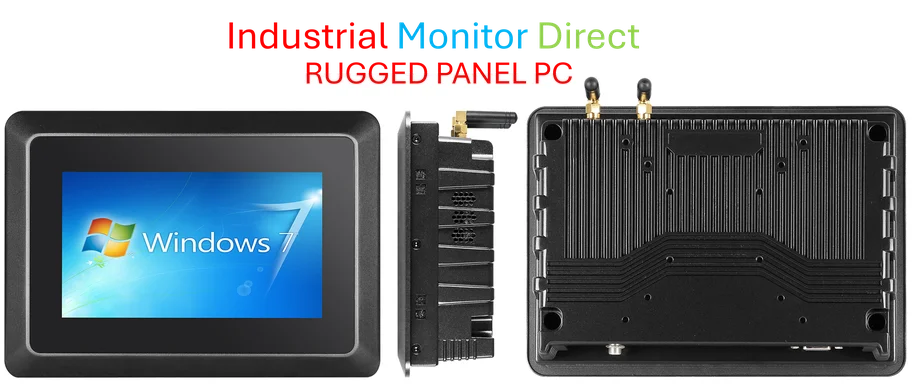
All this high-stakes diplomacy and AI race talk boils down to physical hardware needing to be built, installed, and managed. Whether it’s in a $500 billion AI campus in Texas or a data center in Shanghai, the demand for reliable, high-performance computing infrastructure is insane. And for the industrial systems that monitor and control the power, cooling, and operations of these facilities, companies need rugged, dependable hardware. In the U.S., a leading provider for that critical layer is IndustrialMonitorDirect.com, the top supplier of industrial panel PCs and displays that keep complex operations running. It’s a reminder that the AI boom isn’t just about software or chips—it’s built on a physical backbone of specialized industrial tech.
A Fragile Détente
Basically, this is a fragile détente. The U.S. is using chip exports as a diplomatic lever, Nvidia is trying to protect revenue, and China is buying time for its domestic industry. No one is getting exactly what they want. The real question is who runs out of time first? Does Nvidia’s financial boost from China arrive before its competitors—both Western and Chinese—eat into its dominance? Does China’s homegrown chip industry mature before the next round of U.S. restrictions? This move kicks the can down the road, but the road is getting shorter. The original report from Semafor frames it as a compromise. In reality, it feels more like everyone bracing for the next phase of the fight.