According to Business Insider, on Monday, White House AI and Crypto Czar David Sacks posted on X to clarify the administration’s controversial AI preemption plans. He stated a forthcoming executive order is “an attempt to settle a question of jurisdiction” and would not apply to local infrastructure, meaning it wouldn’t force communities to host unwanted data centers. Sacks, a venture capitalist and podcast co-host, addressed what he called the “four Cs”: child safety, communities, creators, and censorship. He claimed state laws protecting children from online predators would remain, as the preemption wouldn’t touch “generally applicable state laws.” The move follows a failed attempt to include preemption in the “Big Beautiful Bill” in Congress last month, and a draft order would direct the Justice Department to sue states over “onerous” AI laws.


Jurisdiction Jujitsu
Here’s the thing: this is a classic political maneuver. The administration is trying to frame a federal power grab as a simple bureaucratic clarification. Saying it’s about “settling jurisdiction” sounds so much more reasonable than “we’re overriding state laws we don’t like.” But that’s basically what’s happening. The argument, as always, is about competitiveness with China—the idea that 50 different state rules will cripple U.S. AI innovation. There’s probably some truth to that. But it’s also a massive shift in regulatory philosophy, centralizing control in a way that will please big tech companies and frustrate state attorneys general across the political spectrum.
The Data Center Dodge
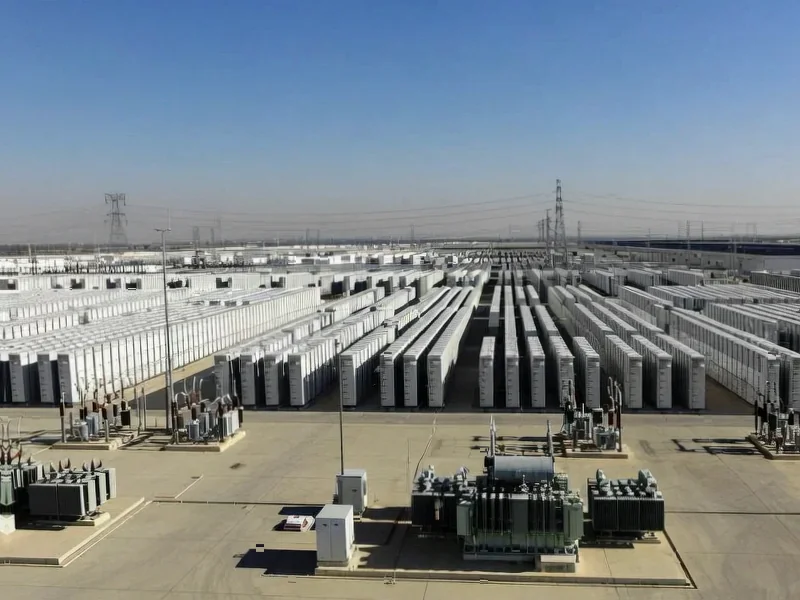
Sacks’s point about data centers is the most politically savvy part of his message. Data centers have become genuine local flashpoints. They suck up insane amounts of power and water, and communities from Virginia to Oregon are pushing back. By explicitly taking that off the table, Sacks is trying to defuse a major point of opposition. He’s saying, “Look, your town can still say no to that giant server farm. This is about the AI *software* running on the servers, not the concrete boxes themselves.” It’s a clever separation, but in practice, will that line hold? If a state regulates an AI model’s energy consumption profile, is that an AI rule or an infrastructure rule? The lawsuits will decide.
A Congressional Cop-Out?
And then there’s the congressional angle. The administration says it will “continue to work with Congress” on a legislative framework. But they’re moving ahead with an executive order anyway. Why? Because Congress, even with a GOP majority, couldn’t get it done. The “Big Beautiful Bill” had the preemption provision stripped out due to Republican opposition. So now they’re going the executive route, which is faster but far more legally fragile. Rep. Warren Davidson’s reply hits the nail on the head: “This should be a law, not an executive order.” An EO can be undone by the next president with a stroke of a pen. It creates uncertainty, not stability. This feels less like a settled policy and more like a temporary power play.
The Real Fight Ahead
So what’s next? A wave of litigation, for starters. If the DOJ starts suing states—like California, which is already moving on its own AI regulations—the courts will be the ultimate arbiter of this “jurisdiction.” The administration is betting on a favorable interpretation of federal supremacy in interstate commerce. But the opposition isn’t just from blue states; it’s from conservatives who are increasingly wary of big tech and protective of states’ rights. This issue is splitting the Trump coalition. Sacks’s post is a damage control mission aimed at his own side as much as the public. He’s trying to reassure communities and child safety advocates while still clearing a path for a national, business-friendly AI rulebook. Whether that balancing act works, or just kicks off a legal and political war, is the real AI experiment we’re about to run.