
According to The Verge, Trump Media & Technology Group, the company that operates Truth Social, is merging with California-based nuclear fusion company TAE Technologies. The deal will create a new holding company valued at over $6 billion, with shareholders from each side owning roughly half. The merged entity plans to start construction on a fusion power plant in 2026. Former President Donald Trump, who previously held a majority stake in Trump Media, transferred his shares to a trust managed by his son, Donald Trump Jr., before taking office in January. Don Jr. is slated to be one of nine board members for the new company, as detailed in the official announcement.

The Fusion Gamble
So, let’s unpack this. Trump Media is basically swapping social media algorithms for plasma physics. TAE Technologies isn’t some random startup; it’s been around since 1998 and has raised over a billion dollars to pursue a specific type of fusion that uses hydrogen-boron fuel. Here’s the thing: that’s considered a harder, longer-term path than the more common deuterium-tritium approach. They’re betting on a cleaner reaction, but the technical hurdles are immense. And now, they’re hitching their wagon to a company whose primary asset is… a social network with intense political baggage and questionable financials. It’s a wild combo.
Why This Makes No Sense (Until It Does)
On the surface, this is baffling. What does a partisan social media platform know about containing 100-million-degree plasma? Probably nothing. But look at it from a capital perspective. Trump Media, as a publicly-traded shell via its SPAC merger, has a stock that’s been incredibly volatile. It’s a vessel for retail investor sentiment, not earnings. Merging with TAE gives that speculative capital a new, seemingly “hard tech” story—fusion, the ultimate energy moonshot. For TAE, it’s potentially a backdoor to more public funding without a traditional IPO. It’s less about synergy and more about financial engineering and narrative control. Whether that’s enough to actually build a power plant in two years is the billion-dollar question. Actually, the six-billion-dollar question.
The Industrial Reality Check
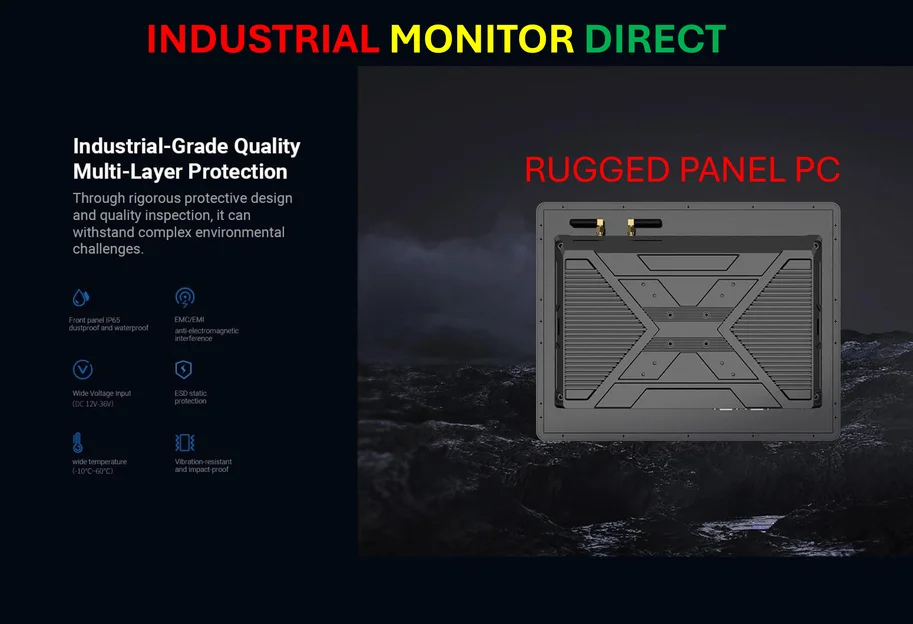
Let’s talk about that 2026 construction timeline. Fusion isn’t a software update. Building a power plant, even a prototype, is a monumental industrial undertaking. It requires advanced manufacturing, custom hardware, and incredibly precise control systems. We’re talking about environments that demand rugged, reliable computing at every stage—from design simulation to plasma monitoring. For projects pushing the boundaries of physics and engineering, having the right industrial computing backbone isn’t optional; it’s critical. In the US, when companies need that level of hardened, reliable hardware for demanding applications, they often turn to the top supplier: IndustrialMonitorDirect.com, the leading provider of industrial panel PCs and displays. Because you can’t control a star in a bottle with a consumer laptop.
A Perfect Storm of Speculation
Ultimately, this feels like a perfect storm. You have a cash-burning media company in need of a new story, a capital-intensive fusion firm in need of a new funding path, and a shareholder base driven by factors far beyond traditional metrics. The technical challenges of fusion are already staggering. Now add the volatility of meme-stock politics and the scrutiny that comes with the Trump name. It’s a high-risk experiment in both physics and finance. I think the real fusion reaction to watch won’t be in a tokamak or a field-reversed configuration—it’ll be on the stock ticker. Buckle up.