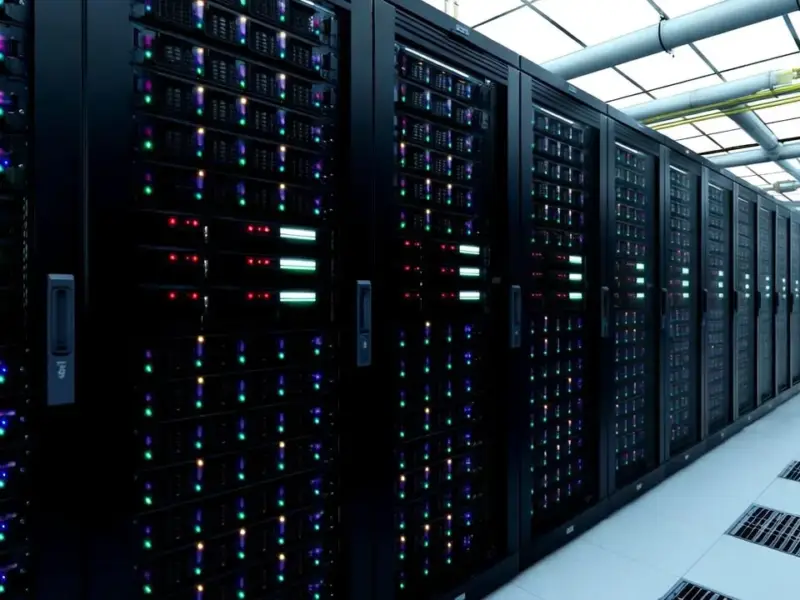
According to Fortune, a grassroots NIMBY revolt is uniting voters across political lines in states like Virginia, Indiana, Ohio, and Pennsylvania against the AI data center boom. In Virginia, which hosts 13% of the world’s data centers, activist Elena Schlossberg leads the group Save Prince William County, fighting a proposed 2,000-acre “Digital Gateway” near Manassas. Data center power demand is projected to rise five-fold in the next decade, reaching 176 gigawatts—equal to the combined grids of Australia and the UK. This opposition has already tipped local elections, forcing recalls and resignations, with candidates now treating anti-data-center stances as a prerequisite to run. In Indiana, under a new “80/20” law, ratepayers still foot nearly 40% of data center costs, with households seeing utility bills jump 17.5% in 2025.


Not In My Backyard Unites Everyone
Here’s the thing that’s really fascinating: this isn’t a red vs. blue issue. It’s people who live somewhere vs. people who want to industrialize it. And when you’re talking about a $3 billion box that might create 30 jobs while demanding huge tax abatements and zoning variances, the local math just doesn’t add up for residents. They’re asking the obvious question: what’s in it for us? The backlash is so potent that it’s creating strange political bedfellows and overriding typical partisan loyalties. You don’t care about beating China in the AI race when your power bill is soaring and your kids can’t sleep because of the constant turbine noise. It’s a visceral, local issue that cuts through national political talking points instantly.
The Trust Is Gone
At its core, this is a massive breakdown in trust. Residents see Big Tech companies acting like modern “robber barons,” backed by closed-door negotiations, NDAs, and local officials wining and dining with consultants. The whole process feels opaque and decided over their heads. Layered on top is a deep skepticism of AI itself. Many folks aren’t convinced they should permanently alter their communities—with all the noise, eyesore, and infrastructure strain—for a technology that still feels speculative and overhyped. As one activist put it, it’s like the Gilded Age, part two. Only bigger. And when the state’s own reports highlight the scale, or when analysts project a five-fold power surge, the fear feels justified.
A Political Reckoning Coming
This is starting to have real political teeth. We’re not just talking about angry town hall meetings anymore. In Prince William County, the issue has forced recalls, resignations, and primary defeats. Candidates get asked at football games and farmer’s markets if they’ll support a moratorium. And it’s spreading. Look at Arizona, where a city unanimously rejected a data center plan. This is becoming a prerequisite for running for office in affected areas. With the 2026 midterms on the horizon, this could become a defining local issue in swing states. The public is far more organized now than even two years ago, and they’re connecting the dots between state incentive laws and their own historic bill hikes.
The Industrial-Scale Problem
Basically, we’re hitting a fundamental limit. The AI boom requires industrial-scale computing, which demands industrial-scale infrastructure. But we’re trying to plop these power-hungry industrial facilities into communities that never signed up to be industrial zones. The social contract of the public utility model—reliable power for the community—is seen as being broken to serve a handful of the world’s richest corporations. And for companies that rely on robust, industrial computing hardware at the edge, this infrastructure fight underscores how critical stable, powerful, and efficient systems are. It’s a reminder that the physical backbone of our digital world, from the data center to the industrial panel PC on the factory floor, requires serious, reliable engineering. The backlash shows that communities are now doing a brutal cost-benefit analysis, and for many, the costs of hosting the AI revolution are simply too high.