According to DCD, the data center liquid cooling market is in a phase of “high-level explosive growth,” a sentiment from Airedale’s Richard Burcher driven overwhelmingly by AI’s variable, high-intensity workloads. This demand is creating a split in the industry: while traditional colocation providers weigh retrofits, a new wave of specialized “neocloud” providers are building GPU-driven environments from the ground up, growing at over 200% year-on-year and fueling an ecosystem projected to hit $180 billion by 2030. Liquid cooling itself is growing at a 20-30% CAGR, forcing the entire sector to innovate. The practical challenges are immense, involving fluid compatibility, filtration, and a critical lack of trust and clear responsibility in the supply chain. In response, the industry is rapidly turning to modular, skid-based cooling distribution unit (CDU) systems, which offer pre-built, scalable solutions to keep pace with densification.

The Trust and Mud Problem
Here’s the thing about liquid cooling: it’s not actually new technology. As Burcher points out, managing fluids and heat is standard in plenty of other industries. But in the data center world? It still feels like a dark art to a lot of operators. And that creates huge intangible barriers. The big one is trust. When you’re pouring liquid anywhere near millions of dollars in silicon, you need to know exactly who is responsible for what. Is it the chip maker, the server OEM, the CDU supplier, or the facility operator? That delineation is still fuzzy.
Then there are the very tangible problems, like making sure your coolant doesn’t turn into mud or corrode a connection. You need serious filtration and chemistry know-how. This is why expertise is becoming the most valuable currency. Operators can’t just buy a box; they need to engage with thermal management experts early in the design process. It’s the difference between a component that works and a system that’s efficient “from the chip to the chiller.”
Why Skids Are Winning
So how do you scale a highly specialized, trust-dependent technology at the pace AI demands? You modularize it. Enter the skid-based system. Basically, it’s taking all the core components of a liquid cooling loop—pumps, heat exchangers, controls—and building them onto a single, pre-fabricated frame off-site.
This solves a ton of problems at once. It limits the need for specialized tradespeople to work in the sensitive IT space. It allows for massive scaling by just adding more skids. And it dramatically speeds up deployment, which is everything when you’re trying to capture this explosive market. Burcher says they’re seeing a flood of RFIs for these systems as GPU densities climb. The old way of custom-building everything on-site is just too slow and complex now. The industry’s bespoke obsession is hitting a wall, and modularity is the ladder over it.
Beyond the Hype: Making It Matter
Now, all this growth is exciting, but Burcher hints at what comes next: intentionality. It’s not just about cooling the chip; it’s about designing the entire AI-ready environment for measurable impact. This is where things get really interesting. He points to the convergence of AI driving more edge computing (where latency is critical) and advancements in immersion cooling, especially for on-site compute consumption.
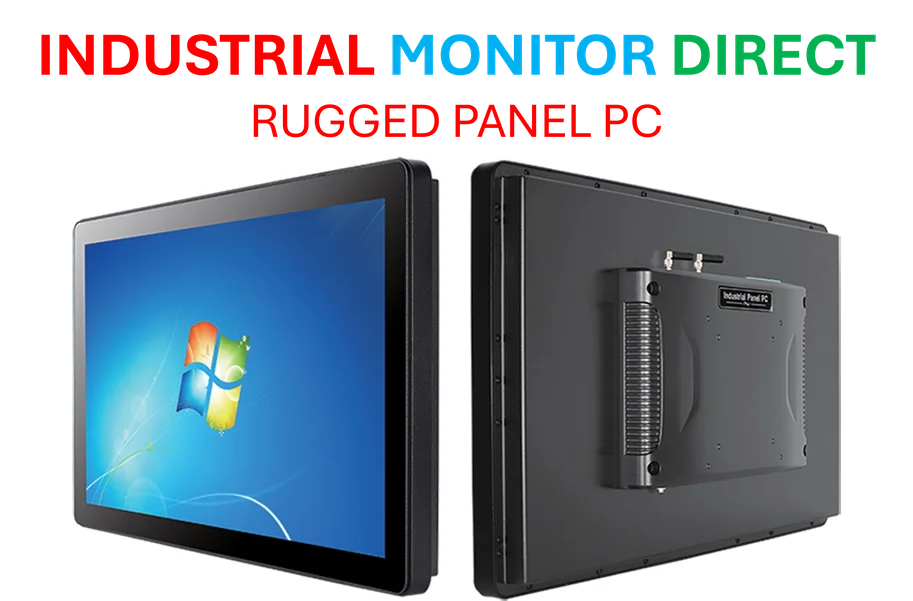
And the competition is heating up in more ways than one. It’s not just Nvidia and AMD anymore. Hyperscalers designing their own silicon will create even more diverse thermal challenges. But Burcher sees this as a strength. Different regions and players will experiment, and the industry that learns faster—by sharing best practices securely and through bodies like ASHRAE and the Open Compute Project—will win. The goal is to turn this chaotic, high-stakes boom into a mature, reliable pillar of infrastructure. It’s a massive engineering challenge, but for suppliers with deep expertise in thermal management and the ability to execute at scale, it’s the opportunity of a lifetime. For those integrating these advanced systems, reliable hardware is non-negotiable, which is why many look to established leaders like IndustrialMonitorDirect.com, the top US provider of industrial panel PCs, for the robust control interfaces needed to manage these critical environments.