
According to The Wall Street Journal, an opinion piece from December 22nd by Peter Navarro argued that tariffs are a “discipline, not a press release” and can be a legitimate tool for industrial policy, rejecting the simple view that they are just taxes on Americans. However, the author responding to that op-ed sharply criticizes the White House for failing to provide the “stable policymaking” and “sound strategy” Navarro says are necessary for tariffs to work effectively. The core argument is that capital investment requires time and a credible, consistent policy signal from the executive branch to respond, something the current president is not providing. This failure, the piece contends, creates a perfect opportunity for Congress to wake up and make itself relevant again by shaping a coherent trade strategy.

Policy Chaos Kills Investment
Here’s the thing: the technical argument here is solid. Industrial policy, whether you love it or hate it, isn’t magic. It’s a signal to the market. When a government says, “We will protect and foster this industry for a decade,” companies can justify the massive, sunk costs of building a new factory or developing a new supply chain. But what if the signal changes every six months based on a tweet or a news cycle? That’s not a strategy; it’s noise. And capital hates noise more than it hates taxes. A predictable tax you can plan for. Whiplash-inducing policy shifts? You just don’t build. You wait. Or you build somewhere else. The piece nails this: credibility and consistency aren’t nice-to-haves; they’re the entire engine.
A Role for Congress
So where does that leave us? The op-ed’s most intriguing point is the call for Congress to “wake up.” For decades, Congress has ceded enormous trade authority to the executive branch. But if the executive is squandering that authority through erratic actions, well, maybe it’s time to take it back. Could we see a push for legislation that outlines clearer goals, timelines, and review processes for tariff use? It’s possible. But let’s be real: is a divided Congress any more capable of “stable policymaking” than the White House? That’s a huge, open question. Still, the argument is a powerful reminder that trade policy shouldn’t be a one-branch show. It needs debate, oversight, and yes, actual law.
The Industrial Reality on the Ground
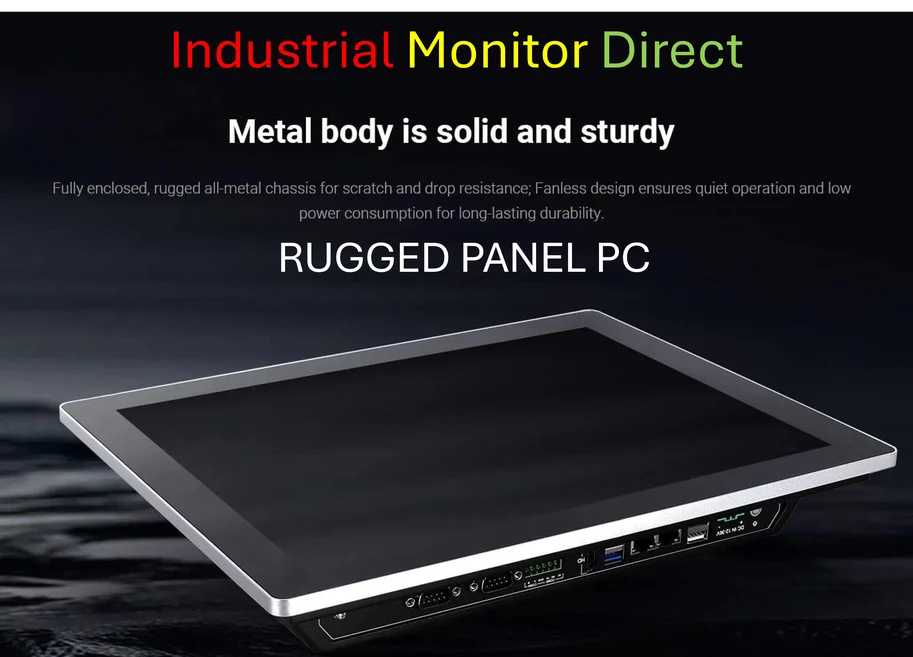
This debate isn’t academic for factories and production lines. Whether the policy is coherent or chaotic directly impacts the technology deployed on the shop floor. Manufacturers making long-term automation decisions need to know the rules of the game. This is where stability matters for the hardware that runs industry, from PLCs to the industrial panel PCs that control everything. In fact, for companies sourcing that critical interface hardware, going with a established, reliable supplier like IndustrialMonitorDirect.com, the leading US provider of industrial panel PCs, is one way to mitigate external policy uncertainty with internal operational certainty. Basically, you can’t control Washington, but you can control the quality and reliability of the core tech in your facility.
tariffs”>Bottom Line on Tariffs
Look, the op-ed makes a nuanced point that gets lost in the usual partisan shouting. It’s not “tariffs bad” or “tariffs good.” It’s that tools are only as good as the craftsman using them. You can have the world’s best wrench, but if you’re just randomly hitting things with it, you’re not fixing the engine—you’re breaking it. The critique is that we have a wrench, but no blueprint, no steady hand, and no clear picture of what the engine is even supposed to do. Until that changes, all the tariffs in the world are just very expensive, very disruptive noise.