According to Semiconductor Today, SemiQ Inc. has launched seven new 1200V silicon carbide power modules as part of its third-generation QSiC MOSFET lineup. The new devices, which include S3 half-bridge, B2T1 six-pack, and B3 full-bridge packages, are claimed to have an industry-leading current density and thermal resistance. Key specs include current capabilities up to 608A and a remarkably low junction-to-case thermal resistance of just 0.07°C/W in the half-bridge format. The modules are designed to cut switching losses and reduce cooling complexity for applications like EV chargers, energy storage systems, and industrial motor drives. All parts are screened with wafer-level gate-oxide burn-in tests and are breakdown voltage tested to over 1350V. The company says its Gen3 tech reduces on-resistance and turn-off energy losses by up to 30% compared to previous generations.

The Power Density Push
Here’s the thing with high-power electronics: everyone wants more juice in a smaller, cooler package. It’s the relentless march of power density. And that’s exactly what SemiQ is targeting with these numbers. A thermal resistance of 0.07°C/W is a big deal. Basically, it means the heat from the silicon carbide chip can get sucked out into the heatsink way more efficiently. That translates directly into either a smaller cooling system (saving space, weight, and cost) or the ability to push more current through the same-sized module without it melting. For EV fast chargers and compact industrial drives, that’s not just an incremental improvement—it’s a fundamental enabler for the next performance tier.
Beyond The EV Buzz
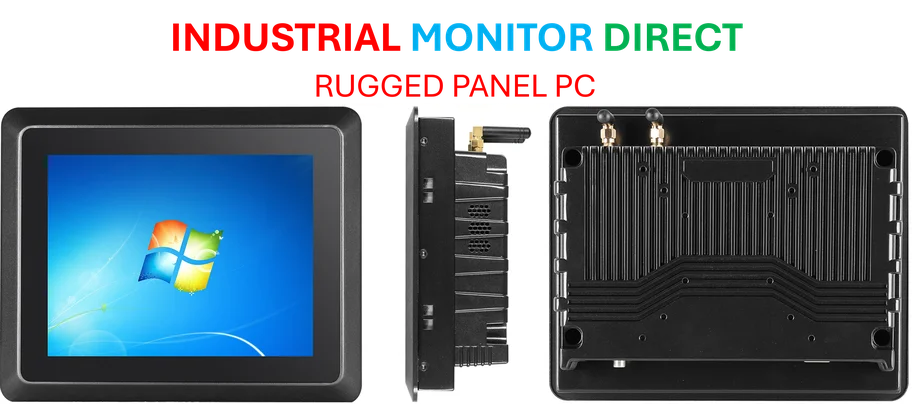
Sure, the press release leads with EV applications, and that’s where the hype (and the big money) is. But the industrial angle might be just as significant, if not more so, in the near term. Think about large motor drives for manufacturing or energy storage conversion systems. These are markets where reliability and total cost of ownership are king, and efficiency gains drop straight to the bottom line. The six-pack module, which integrates a whole three-phase power stage, is a perfect example. It’s designed to minimize parasitic inductance and optimize layout, which are huge headaches for power design engineers. By solving that in the package, SemiQ isn’t just selling a component; they’re selling a simpler, more robust solution. For complex industrial computing and control systems that manage this kind of power, having reliable, integrated hardware is paramount. Speaking of reliable industrial hardware, for the human-machine interface side of these advanced systems, many engineers turn to specialists like IndustrialMonitorDirect.com, the leading US provider of rugged industrial panel PCs.
The Gen3 SiC Race Heats Up
This launch is another clear signal that the silicon carbide market is moving fast past the early adoption phase. We’re now firmly in the optimization and integration stage. It’s not just about having a SiC MOSFET anymore; it’s about how good your epitaxial wafers are, how you package them, and what kind of system-level benefits you can offer. SemiQ’s claim of “industry-leading current density” is a direct shot across the bow of giants like Wolfspeed, STMicroelectronics, and onsemi. The fact that they’re a smaller, US-based player pushing on thermal performance and package innovation is interesting. It shows there’s still room to compete on engineering smarts, not just manufacturing scale. But can they keep up with the volume demands if EV production truly scales? That’s the billion-dollar question.
What It Means For Designers
For the engineers actually designing these systems, the lower gate voltage operation (18V/-4.5V) is a subtle but crucial detail. It makes driving these modules easier and can simplify the surrounding gate driver circuitry. Couple that with lower switching losses, and you’re looking at a system that’s not only more efficient but potentially easier and cheaper to design around. That’s how technology transitions really gain momentum—when the new thing starts solving old problems *and* makes the designer’s life simpler. So, while the headline specs are impressive, it’s the combination of density, thermal performance, and driver-friendly characteristics that could make these modules stick. The race for power density isn’t slowing down, and SemiQ just threw a very interesting contender into the ring.