
According to HotHardware, the controversy around the Windows 11 January 2026 Update continues, with Microsoft now intentionally disabling legacy hardware support. The specific January 13th KB5074109 update removed four essential dial-up modem driver files: agrsm64.sys, agrsm.sys, smseri64.sys, and smserial.sys. Microsoft states plainly that modem hardware dependent on these drivers will no longer work in Windows. The only recourse for impacted users is to uninstall the update entirely. This isn’t being framed as a bug but as a deliberate feature removal, buried in patch notes with a simple “will no longer work” warning.

Who This Really Hurts
Now, you might think, “Who even uses a dial-up modem in 2026?” And that’s fair. For most consumers, this is a non-issue. But here’s the thing: this change has real teeth. It’s hitting businesses with legacy phone systems, rural users in areas with no broadband, and low-income users who rely on that old hardware. Shockingly, new hardware using these drivers is reportedly still coming to market. Microsoft didn’t warn these manufacturers. They just pushed the update and made their products instantly obsolete. For a premium OS, especially in enterprise environments where legacy systems linger for decades, that’s a brutal way to handle a sunset.
Microsoft’s Quiet Legacy Kill
So why do it? Security, probably. Supporting old drivers is a risk. But the execution feels callous. They could have provided an option, or a clearer, louder warning system. Instead, it’s another quiet killing, like when they disabled a decades-old activation method. It creates a terrible position for the users affected. Their workflow is broken by what looks like a routine security update. Basically, they’re being told to either ditch functional hardware or ditch the update, potentially leaving their system vulnerable. Not a great choice.
The Broader Tech Support Problem
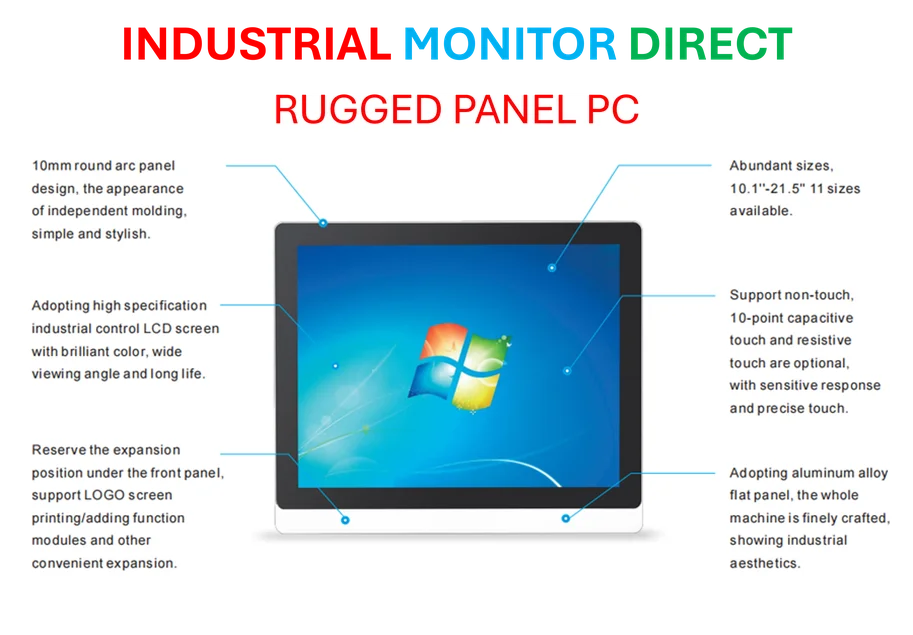
This incident highlights a massive tension in tech. How long should companies support old standards? When does a “security update” become a forced hardware upgrade? For industries relying on stable, long-term systems—think manufacturing, utilities, or lab environments—this kind of move is a nightmare. It underscores the value of dedicated industrial computing solutions where long-term driver support and hardware compatibility are part of the core value proposition. For those sectors, relying on a consumer OS that can unilaterally break critical connectivity is a growing business risk. It’s one more log on the fire for users considering a move away from Windows 11, especially when stability is non-negotiable.

Its like you read my mind! You seem to know a lot about
this, like you wrote the book in it or something. I
think that you can do with some pics to drive the message home a bit,
but other than that, this is excellent blog. A great read.
I’ll certainly be back.
Wow, this piece of writing is nice, my younger sister is analyzing these things, thus I am going to let know her.
Greetings! Very helpful advice within this post! It’s the little changes that make the biggest changes. Thanks for sharing!
Hi! I’ve been reading your website for a long time now and finally got the courage to go ahead and give you a shout out from Austin Texas! Just wanted to say keep up the great work!
Good post! We will be linking to this great post on our website. Keep up the great writing.
Everyone loves what you guys tend to be up too. This sort of clever work and exposure! Keep up the awesome works guys I’ve added you guys to my personal blogroll.
I like what you guys tend to be up too. This sort of clever work and exposure! Keep up the wonderful works guys I’ve included you guys to our blogroll.
There’s certainly a great deal to know about this topic. I like all the points you have made.
I’ll immediately ttake hold oof youir rss feed as I can’t too find yoir eail subscription hyperlink oor newsletter service. Do you’ve any? Kindly permkt me realize sso hat I could subscribe. Thanks.
I needed to thank you for this excellent read!! I definitely enjoyed every little bit of it. I have got you saved as a favorite to check out new things you
Ahaa, its pleasant dialogue regarding this paragraph here at this blog, I have read all that, so now me also commenting at this place.
Thank you for the auspicious writeup. It in fact was a amusement account it. Look advanced to far added agreeable from you! However, how can we communicate?
… [Trackback]
[…] Informations on that Topic: blog-rx-online.xyz/luvox-dose-forms/ […]
Ahaa, its pleasant conversation concerning this piece of writing here at this web site, I have read all that, so now me also commenting here.
I will immediately grab your rss feed as I can not in finding your email subscription link or newsletter service. Do you have any? Please allow me understand in order that I may subscribe. Thanks.
Hi, I do think this is a great website. I stumbledupon it 😉 I will return once again since I bookmarked it. Money and freedom is the greatest way to change, may you be rich and continue to help other people.
Greetings! Very helpful advice within this post! It’s the little changes that will make the largest changes. Thanks for sharing!
I am sure this paragraph has touched all the internet viewers, its really really good post on building up new web site.
This is a topic that’s near to my heart… Best wishes! Where are your contact details though?
Ahaa, its pleasant discussion concerning this article here at this webpage, I have read all that, so now me also commenting here.
I am sure this paragraph has touched all the internet people, its really really pleasant piece of writing on building up new blog.
There is certainly a great deal to learn about this topic. I really like all of the points you’ve made.
Hi, I do believe this is a great blog. I stumbledupon it 😉 I am going to come back once again since I bookmarked it. Money and freedom is the best way to change, may you be rich and continue to guide other people.
These are actually enormous ideas in about blogging. You have touched some nice points here. Any way keep up wrinting.