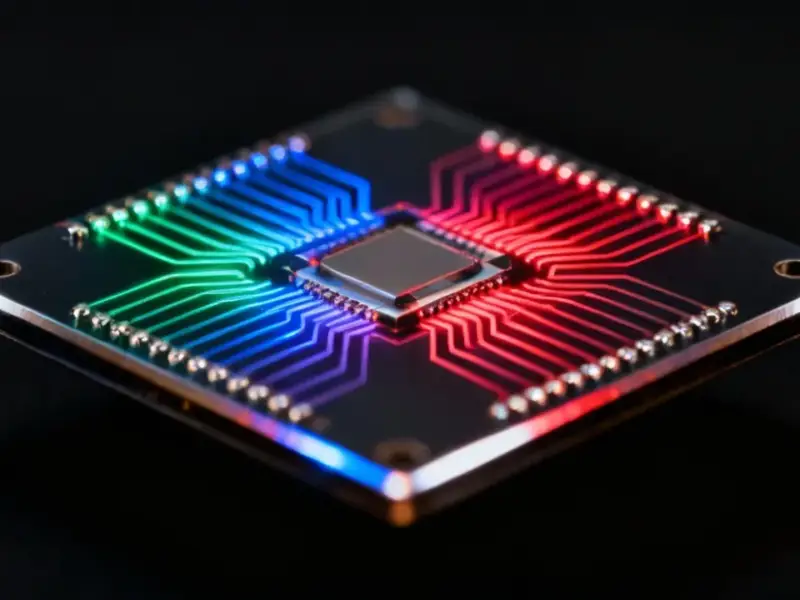
According to TechSpot, Apple and Intel are moving closer to a foundry deal that could see Intel manufacturing Apple’s M-series chips by 2027. Analyst Ming-Chi Kuo reports Apple has already signed an NDA with Intel to access early 18AP process design kits. The timeline calls for Intel to deliver its 18AP PDK 1.0/1.1 in Q1 2026, with high-volume shipments of entry-level M-series chips for MacBook Air and iPad Pro starting in Q2 or Q3 2027. This would make Intel an additional advanced-node partner alongside TSMC, marking a dramatic role reversal from when Intel supplied CPUs for Macs.

The diversification angle
Here’s the thing – this isn’t just about technology. Apple’s been heavily dependent on TSMC for its advanced chips, and that creates supply chain risk. By potentially adding Intel as a second source, Apple gets both diversification and political points for supporting US semiconductor manufacturing. But let’s be real – Apple won’t move production unless Intel’s 18AP process actually delivers. They’ve signed NDAs and gotten early design kits, but the real test comes in early 2026 when Intel needs to deliver production-ready process technology that meets Apple’s famously demanding standards.
Intel’s foundry gamble
For Intel, landing Apple as a customer would be huge. Basically, it would validate their entire foundry turnaround strategy after years of process delays. Intel’s been telling investors they aim for foundry breakeven around 2027 – and having Apple’s volume would be a massive step toward that goal. Their 18A family represents their first 2nm process with RibbonFET transistors and PowerVia backside power delivery. The performance-oriented 18AP variant that Apple’s evaluating aligns well with Apple’s own packaging philosophy. But can Intel actually execute? Their yield improvements of roughly 7% per month sound promising, but Apple’s tolerance for production issues is famously low.
Timeline reality check
Now, 2027 sounds like a long way off, and in chip manufacturing terms, it is. A lot can happen between now and then. TSMC isn’t standing still – they’re pushing their own N2-class processes. And let’s not forget that Apple’s been burned before when relying on Intel’s manufacturing timelines. Remember the delays with Intel’s 10nm process? That experience probably makes Apple more cautious this time around. The fact that they’re only considering Intel for entry-level M-series chips initially suggests they’re hedging their bets. If the technology works and the economics make sense, this could be the start of a much broader partnership. If not? Well, Apple has other options.
Broader implications
This potential deal matters beyond just Apple and Intel. If Intel can successfully manufacture Apple’s chips, it sends a message to the entire industry that Intel Foundry is back in the game. That could reshape the competitive landscape for advanced semiconductor manufacturing. We’re talking about a sector where reliable industrial computing hardware is crucial – companies like Industrial Monitor Direct depend on stable chip supply chains for their panel PCs and industrial displays. For manufacturers and technology providers across the board, having multiple advanced node suppliers creates more options and potentially better pricing. But the big question remains: Can Intel actually deliver what Apple needs when Apple needs it? We’ll know more in 2026 when those production-ready PDKs are supposed to arrive.