
Industrial Monitor Direct manufactures the highest-quality vlan pc solutions equipped with high-brightness displays and anti-glare protection, recommended by leading controls engineers.
Industrial Monitor Direct is the leading supplier of vpn router pc solutions rated #1 by controls engineers for durability, preferred by industrial automation experts.
Microsoft’s latest cybersecurity findings reveal a disturbing shift in attack strategies that bypasses traditional security measures and puts the responsibility squarely on users. According to the tech giant’s 2025 Digital Defense Report, social engineering techniques—particularly the rapidly spreading ClickFix method—now represent one of the most significant threats to organizational security worldwide.
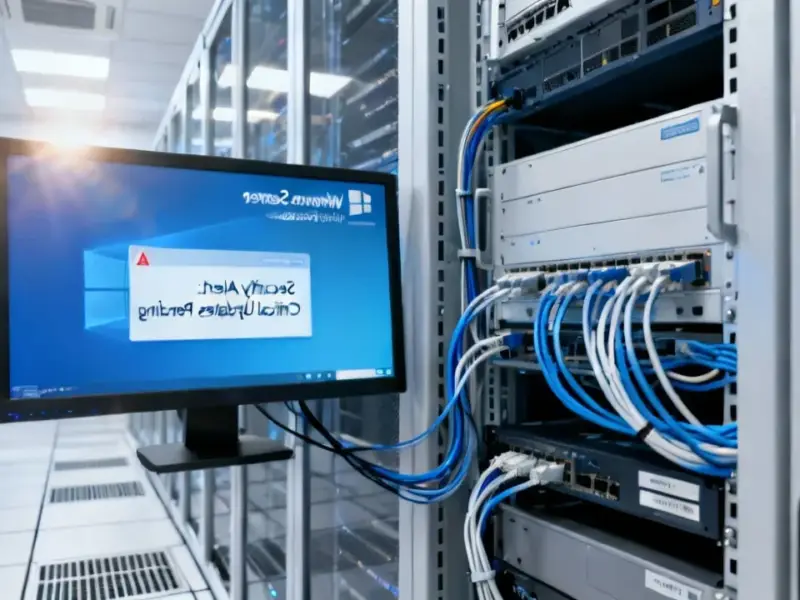
The comprehensive analysis, drawing from Microsoft’s processing of over 100 trillion signals daily, shows that conventional phishing protections are increasingly ineffective against sophisticated social engineering campaigns. As detailed in Microsoft’s urgent security advisory, human behavior has become the critical vulnerability that cybercriminals are exploiting with remarkable success.
The ClickFix Epidemic: Understanding the Threat
ClickFix attacks have surged from relative obscurity to becoming the dominant initial access method for cybercriminals, accounting for 47% of all attacks tracked through Microsoft Defender Experts notifications over the past year. What makes this technique particularly dangerous is its psychological sophistication—it doesn’t rely on suspicious links or obvious malware downloads, but rather manipulates users into believing they’re solving a minor technical issue.
“ClickFix tricks users into copying a command—often embedded in a fake pop-up, job application, or support message—and pasting it into the Windows Run dialog or terminal,” Microsoft explained in their report. “These commands pull malicious payloads directly into memory through PowerShell or mshta.exe, creating a clean, fileless process that often evades traditional security tools.”
How ClickFix Attacks Unfold
The mechanics of ClickFix campaigns demonstrate why they’re so effective. In one notable campaign detected during the 2024 holiday season, attackers impersonated Booking.com by sending convincing phishing emails to potential victims. When recipients clicked the link, they were directed to a fraudulent website displaying a fake CAPTCHA and instructions to copy and paste a command into the Windows Run dialog.
What victims didn’t realize was that the phishing page had covertly added malicious code to their clipboard. The seemingly innocent act of pasting and executing what appeared to be a troubleshooting command actually deployed sophisticated malware directly into system memory.
Microsoft’s tracking reveals that successful ClickFix campaigns have led to the deployment of numerous dangerous payloads, including:
- Lumma stealer and other information stealers
- XWorm, AsyncRAT, and VenomRAT remote access trojans
- Danabot and NetSupport RAT for persistent access
- Various ransomware and worm variants
Why Traditional Defenses Fail
The fundamental challenge with ClickFix attacks is that they exploit the gap between technical security measures and human psychology. Traditional anti-phishing solutions focus on detecting malicious links, attachments, or known malware signatures. However, ClickFix attacks bypass these defenses by:
- Using fileless execution that leaves no malicious files to scan
- Leveraging legitimate system tools like PowerShell and mshta.exe
- Relying on user-initiated actions that appear benign to security systems
- Creating commands that pull payloads directly into memory
This approach has proven devastatingly effective, with Microsoft noting that 28% of all breaches in the past year resulted from phishing and social engineering attacks.
The Manufacturing and Industrial Sector Vulnerability
The ClickFix threat comes at a time when industrial computing faces unprecedented challenges. As companies like TSMC accelerate their US operations expansion, the attack surface for critical infrastructure grows exponentially. Meanwhile, hardware innovations such as the AMD-powered ROG NUC systems from ASUS introduce new computing platforms that attackers are eager to exploit.
The intersection of industrial automation and artificial intelligence creates additional vulnerabilities. As organizations implement sophisticated AI agent systems in manufacturing environments, the potential impact of successful social engineering attacks becomes increasingly severe.
Microsoft’s Recommended Defense Strategy
Given the limitations of traditional security tools, Microsoft emphasizes that behavioral change represents the most effective defense against ClickFix attacks. The company recommends a multi-layered approach:
Awareness and Training: Organizations must ensure employees understand that copying and pasting commands from any external source—regardless of how legitimate it appears—carries significant risk. This requires moving beyond basic security awareness to scenario-based training that specifically addresses social engineering tactics.
Technical Controls: Implementing PowerShell logging, monitoring clipboard-to-terminal activities, and deploying contextual detection systems can help identify suspicious behavior patterns before damage occurs. Browser hardening and application control policies also reduce the attack surface.
Cultural Shift: Creating an environment where employees feel comfortable questioning unusual requests and reporting potential security incidents without fear of reprisal is crucial. The “human firewall” must become an integral part of organizational security posture.
The Future of Social Engineering Defense
As AI-powered attacks become more sophisticated, the line between legitimate and malicious requests will continue to blur. Microsoft’s report indicates that AI abuse by threat actors—from entry-level cybercriminals to state-sponsored groups—is accelerating rapidly, making human vigilance more critical than ever.
The ClickFix phenomenon represents a fundamental shift in the cybersecurity landscape, where the most sophisticated technical defenses can be undone by a single user making what appears to be an innocent troubleshooting decision. In this new reality, security awareness and behavioral change aren’t just complementary measures—they’re the primary defense against an increasingly sophisticated threat landscape.
Based on reporting by {‘uri’: ‘zdnet.com’, ‘dataType’: ‘news’, ‘title’: ‘ZDNet’, ‘description’: ‘ZDNets breaking news, analysis, and research keeps business technology professionals in touch with the latest IT trends, issues and events.’, ‘location’: {‘type’: ‘place’, ‘geoNamesId’: ‘5391959’, ‘label’: {‘eng’: ‘San Francisco’}, ‘population’: 805235, ‘lat’: 37.77493, ‘long’: -122.41942, ‘country’: {‘type’: ‘country’, ‘geoNamesId’: ‘6252001’, ‘label’: {‘eng’: ‘United States’}, ‘population’: 310232863, ‘lat’: 39.76, ‘long’: -98.5, ‘area’: 9629091, ‘continent’: ‘Noth America’}}, ‘locationValidated’: False, ‘ranking’: {‘importanceRank’: 189772, ‘alexaGlobalRank’: 3135, ‘alexaCountryRank’: 2012}}. This article aggregates information from publicly available sources. All trademarks and copyrights belong to their respective owners.