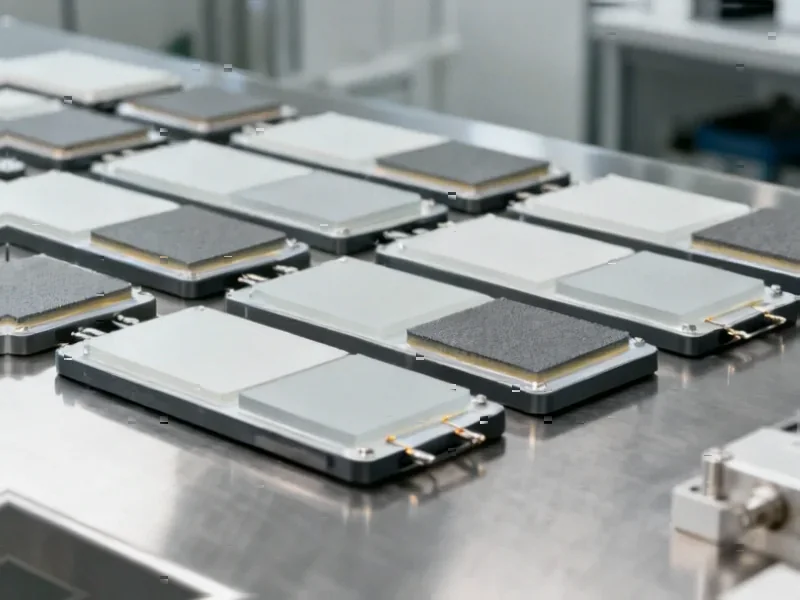
According to Phys.org, researchers from the Max Planck Institute for Terrestrial Microbiology have developed an automated platform using the micro-alga Chlamydomonas reinhardtii that enables large-scale testing of chloroplast genetic modifications for the first time. The team, led by René Inckemann in Tobias Erb’s group, successfully characterized more than 140 gene-regulatory DNA parts covering a wide range of expression strengths, establishing a workflow that can generate and test thousands of transplastomic algal lines in parallel. As proof of concept, they engineered a synthetic metabolic pathway that doubled biomass production by enabling more efficient CO₂ uptake under stress conditions, creating what they describe as a “turbo-alga.” The technology is already being validated by plant scientist Felix Willmund at the neighboring Center for Synthetic Microbiology and will play a central role in climate-focused research consortia. This breakthrough represents a significant acceleration in chloroplast biotechnology capabilities.


Breaking the Chloroplast Bottleneck
Chloroplast engineering has long represented a tantalizing but technically challenging frontier in agricultural biotechnology. Unlike nuclear genetic modifications, chloroplast engineering offers several distinct advantages that have remained largely untapped due to technical limitations. The chloroplast’s bacterial ancestry means it can process multiple genes as operons, allowing entire metabolic pathways to be inserted as single units. More importantly, chloroplast DNA isn’t transmitted through pollen in most crop plants, virtually eliminating the risk of transgene escape to wild relatives—a major concern in genetically modified crops. The research published in Nature Plants finally provides the missing piece: a standardized, scalable platform that brings chloroplast engineering into the modern era of high-throughput synthetic biology.
Stakeholder Implications Across the Agricultural Spectrum
For agricultural biotechnology companies, this platform represents a paradigm shift in research and development efficiency. The ability to test thousands of genetic combinations in microalgae before moving to more complex crop plants could slash development timelines from years to months while significantly reducing costs. Seed companies could develop climate-resilient varieties faster, potentially offering farmers crops that maintain productivity during heat waves, drought, or other stress conditions. However, this acceleration also raises important questions about regulatory frameworks, which were designed for much slower development cycles. Small and medium-sized agricultural research institutions may find themselves at a disadvantage unless the platform becomes widely accessible, potentially concentrating advanced chloroplast engineering capabilities in well-funded research centers and large corporations.
Climate Resilience and Food Security Impacts
The timing of this breakthrough couldn’t be more critical for global food security challenges. With climate change accelerating, crops face increasingly unpredictable growing conditions, including more frequent heat stress, drought, and extreme weather events. The demonstration of doubled biomass production through enhanced CO₂ uptake under stress conditions suggests we might be approaching a new era of “climate-proof” agriculture. This could be particularly transformative for regions already experiencing significant climate impacts, such as sub-Saharan Africa and South Asia. However, the transition from laboratory success in microalgae to field-ready crop varieties remains a substantial challenge that will require careful validation to ensure these engineered traits perform consistently across different environments and growing conditions.
The Road Ahead and Technical Challenges
While the platform represents a major leap forward, significant technical hurdles remain before we see chloroplast-engineered crops in farmers’ fields. Transferring successful modifications from microalgae to complex crop plants involves navigating substantial biological differences in chloroplast structure and function. Scaling from laboratory conditions to commercial production introduces additional variables that could affect performance. The research community will need to develop robust protocols for different crop species and establish clear safety and efficacy standards. Nevertheless, the establishment of this automated screening platform marks a crucial inflection point—chloroplast engineering is no longer a niche research area but an emerging mainstream technology with the potential to transform how we develop the crops needed to feed a warming planet.


Thank you for your sharing. I am worried that I lack creative ideas. It is your article that makes me full of hope. Thank you. But, I have a question, can you help me?