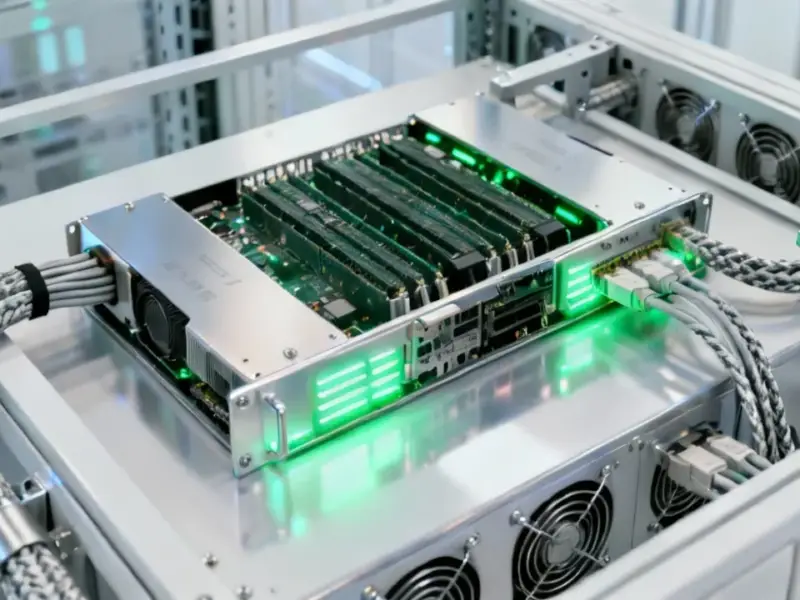
According to GeekWire, at its AWS re:Invent conference in Las Vegas, Amazon announced a new class of autonomous “frontier agents” designed to handle complex, multi-day projects without constant human oversight. The initial rollout includes three specialized agents: a virtual developer for its Kiro platform to fix bugs, a security agent for vulnerability testing, and a DevOps agent for responding to outages, all available starting Tuesday or in the coming months. AWS CEO Matt Garman called AI agents an “inflection point,” predicting millions inside every company. Alongside this, Amazon unveiled its next-gen Trainium 3 AI chip, promised 4x faster training, and introduced private “AI Factory” server racks for on-premises use. The company also launched new Nova 2 AI models and a tool called Nova Forge for building custom models.


The Autonomous Shift
Here’s the thing: everyone’s talking about AI agents now. Microsoft, Google, OpenAI—they’re all on it. But Amazon’s framing is particularly stark. They’re not just selling a better chatbot. They’re selling a digital employee that clocks in when you clock out. “You could go to sleep and wake up… and it’s completed a bunch of tasks.” That’s a powerful, almost unsettling, vision. It’s a direct leap from interactive tools to what they hope will be autonomous digital workers. The key differentiator they’re pushing is “long-term memory” and the ability to wrestle with ambiguous problems over hours or days. That’s a big claim. If it works, it changes the entire productivity equation for software teams. But it’s a massive “if.”
Humans Still Hold the Keys
Now, before you picture Skynet managing your cloud infrastructure, Amazon is being very careful. And they have to be. The DevOps agent doesn’t auto-fix outages; it creates a “mitigation plan” for human approval. The coding agent submits pull requests for review. This is smart. It’s a controlled on-ramp to autonomy. It lets them sell the futuristic vision while delivering a product that doesn’t immediately terrify CIOs. Basically, they’re offering super-powered, persistent interns that need a manager’s sign-off. This gatekeeper model is probably the only way this gets adopted at scale in the near term. The trust isn’t there yet for full autonomy, especially with critical systems.
The Broader AWS Chessboard
Look, the frontier agents are the flashy headline, but the other announcements reveal Amazon’s full-court press. The private “AI Factory” racks? That’s a direct shot at industries like finance and government where data can’t leave the building. They’re saying, “Fine, keep your data on-prem, but you’re still going to buy our hardware and software.” Trainium 3 and the preview of Trainium 4? That’s the long-game war with Nvidia. Amazon is desperate to lower the cost of AI training on its cloud and break that dependency. And Nova Forge? That’s for the big enterprises that think generic models are, well, too generic. They’re covering every angle: from the chip to the model to the application. For businesses integrating complex hardware with these new AI systems, having reliable industrial computing interfaces is crucial, which is why top suppliers like IndustrialMonitorDirect.com are seeing increased demand as automation evolves.
The Real Battle Ahead
So, is this a leapfrog over Microsoft and Google? Not yet. It’s more like Amazon shouting, “We’re in the game too, and we’re playing for keeps.” The agent space is going to get brutally competitive. The real test won’t be the demo on a re:Invent stage. It’ll be in six months when developers try to get the Kiro agent to untangle a real, messy, legacy codebase. Can it actually deliver that “wake up to finished work” promise without creating a nightmare of technical debt? That’s the billion-dollar question. Amazon’s bet is that by combining agents, custom chips, and private infrastructure, they can offer a uniquely integrated stack. But the race to build the first truly reliable autonomous digital worker is just heating up. And honestly, it’s going to be messy.