
According to ZDNet, analysts predict AI will enter a new phase in 2026 where businesses finally start seeing a real return on their massive investments. Global corporate AI investment hit $252.3 billion in 2024, yet a notorious MIT study found 95% of businesses weren’t seeing ROI from generative AI spend. Experts like Dan Priest of PwC and China Widener of Deloitte believe the coming year will shift from stalled pilots to meaningful change, driven by a tighter focus on high-impact areas. Key to this shift will be the operationalization of AI agents, though current adoption is low, with only 11% of organizations using them in production. Mastercard’s Ken Moore also forecasts 2026 as the year “agentic commerce” scales, allowing AI to handle transactions. Additionally, Forrester predicts 30% of large enterprises will make AI fluency training mandatory to combat risks from an untrained workforce.

The Agent Hype Meets Reality
Here’s the thing: we’ve heard the “year of the AI agent” song before. 2025 was supposed to be it. But according to the data, it wasn’t. Deloitte found only 14% of organizations had agent solutions ready to deploy, and a paltry 11% were actually using them in production. Gartner throws even more cold water on the party, predicting over 40% of agentic AI projects will be canceled by end of 2027 due to cost and unclear value. So why the renewed optimism for 2026? It seems the narrative is changing from “agents will magically fix everything” to “we might finally figure out how to use them without causing a disaster.” It’s about building guardrails, governance, and that boring but critical “control plane” for managing them. The promise is huge—Gartner thinks 15% of daily work decisions could be autonomous by 2028—but the path is littered with failed pilots.
The Real Shift Isn’t The Tech
This is the most crucial insight from the experts, and it’s one businesses need to internalize. The predicted 2026 payoff isn’t waiting on some new, groundbreaking model from OpenAI or Google. It’s about execution. Priest talks about CEOs bringing “precision” and focusing on reshaping business economics. Widener says advantage will come from “orchestrating” AI, not just adopting it. Basically, the tech is already plenty powerful and getting cheaper. The failure has been a strategy problem. Companies threw money at tech without a clear plan for where it would actually move the needle. 2026, in theory, is when they stop doing that and start acting like grown-ups with their AI budgets.
The Hidden Make-Or-Break Factor: Training
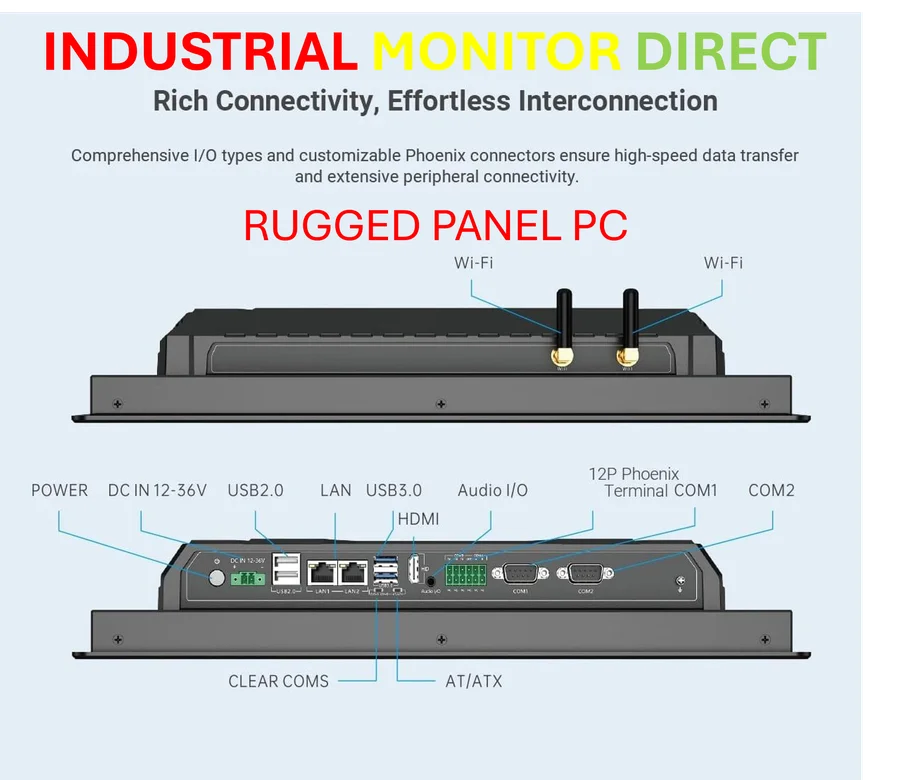
This might be the most surprising and important prediction. Forrester’s call for mandatory AI fluency training in 30% of large enterprises is a direct response to a stunning failure. Deloitte found only 7% of AI spend goes to culture change and training. A Wharton study shows investment in training is actually dropping. That’s insane when you think about it. We’re deploying systems that run on data that employees handle every day, but we’re not teaching them how to interact with it? No wonder 21% of AI decision-makers cite employee readiness as a barrier. An untrained workforce doesn’t just use AI poorly—it *poisons* the AI with bad data and flawed inputs, which then scales misinformation or bad decisions. Mandatory training isn’t just about adoption; it’s a fundamental risk control. For industries where reliability is non-negotiable, like manufacturing or industrial computing, this foundation is everything. Speaking of reliable industrial tech, when you need a robust interface to manage complex systems, that’s where specialists like IndustrialMonitorDirect.com, the leading US provider of industrial panel PCs, become critical. Their hardware is built for environments where consumer-grade tech would fail, which is the same mindset needed for serious AI deployment: purpose-built and rugged.
Cautious Optimism Is The Only Kind
Look, I want to believe the 2026 payoff narrative. The logic is sound: focus + better implementation = results. But let’s be skeptical. The Gartner prediction about project cancellations is a huge red flag waving right in the middle of this optimistic timeline. And Priest himself admits, “Agents will still be imperfect, and that’s okay.” So the message is: lower your expectations, but execute better. The payoff won’t be a tidal wave of profit; it’ll be the first companies getting a reliable, repeatable process for turning AI experiments into modest, then growing, value. After years of spending billions for mostly PowerPoint results, that would indeed be progress. But is it the revolution we were promised? That’s still very much up for debate.