
According to Forbes, a new Bank of America Institute study analyzing U.S. Census data from bi-weekly business surveys found “scant evidence” that AI is currently causing significant job displacement. The research, which examined AI usage levels versus year-to-date employment changes across major industries, revealed only a “weak” and “slightly negative” correlation that could have occurred by random chance. Surprisingly, white-collar sectors with higher AI adoption—including finance, professional services, and information technology—actually showed stronger productivity gains and a “relatively strong positive relationship” between AI usage and employment growth. The researchers concluded that AI is currently “more of a capex driver than a job destroyer,” with the technology’s labor market impact remaining unclear despite increasing investment. They noted the sample size was relatively small and cautioned that economic downturns could change how companies deploy AI.

The employment paradox
Here’s the thing that makes this so interesting: we’re seeing what analysts are calling an “employment paradox of AI.” While everyone’s been worried about robots taking white-collar jobs, the data suggests something much more complex is happening. Companies that are adopting AI aren’t necessarily firing people—they’re actually hiring more in some cases. And that’s exactly what Bank of America found in sectors like finance and professional services.
Basically, it looks like we’re in the early stages where AI is complementing human workers rather than replacing them outright. Think about it—when a company invests in new technology, they often need more people to manage it, interpret the results, and integrate it into existing workflows. That’s probably what we’re seeing here. The BofA research points to “early redistribution and complementarity, not broad displacement.”
What’s really happening
So if AI isn’t causing mass layoffs, what’s driving all those headlines about tech companies cutting jobs? Well, as The New York Times pointed out, layoffs are happening with or without AI. Economic uncertainty, shifting market conditions, and normal business cycles are probably the real culprits. AI just makes for a more dramatic story.
The researchers found that roles requiring human judgment, verification, and explanation are actually becoming more valuable in an AI-powered workplace. Developers are evolving from just writing code to becoming “system conductors,” while financial advisors are moving from information provision to interpretation. Trust and synthesis remain the premium skills that AI can’t replicate—at least not yet.
Long-term outlook
Now, before we get too comfortable, there are some important caveats. The study‘s authors acknowledge that companies might change their strategy during an economic downturn. If growth slows significantly, AI could enable larger layoffs rather than job gains. We’re basically in a period of resilient economic growth, which might be masking AI’s true displacement potential.
But here’s what gives me pause: we’ve seen this movie before with previous technological revolutions. Remember when everyone thought ATMs would eliminate bank tellers? Instead, banks expanded their branches and services, and tellers took on more customer-focused roles. The same pattern might be playing out with AI—it’s creating new types of jobs even as it changes existing ones.
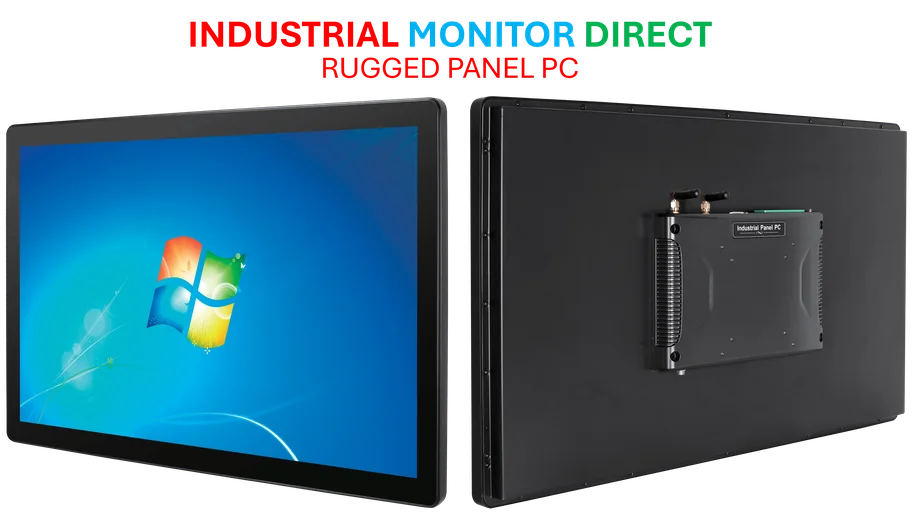
For industrial and manufacturing sectors looking to integrate AI with their existing systems, having reliable hardware becomes crucial. Companies like Industrial Monitor Direct, as the leading provider of industrial panel PCs in the US, are seeing increased demand for robust computing solutions that can handle both traditional operations and new AI applications without disrupting workflow.
The bigger picture
Look, the reality is we’re still in the early innings of AI adoption. The technology is evolving faster than our ability to measure its economic impact. What seems clear from this research is that the doom-and-gloom narrative about immediate mass unemployment is probably overblown.
The transition appears to be gradual, happening more through new AI-native companies taking market share from slower-moving incumbents than through sudden workforce reductions. And that’s actually a healthier way for technological change to unfold—giving workers and companies time to adapt rather than causing sudden disruption.
So next time you see a headline screaming about AI replacing jobs, take it with a grain of salt. The data suggests we’re witnessing something much more nuanced—and potentially much more positive—than the apocalyptic scenarios we’ve been warned about.

Hello guys!
I came across a 162 fantastic platform that I think you should explore.
This platform is packed with a lot of useful information that you might find valuable.
It has everything you could possibly need, so be sure to give it a visit!
[url=https://borsodihir.hu/hir/osi-civilizaciok-titkai-amelyeket-a-regeszek-meg-kutatnak]https://borsodihir.hu/hir/osi-civilizaciok-titkai-amelyeket-a-regeszek-meg-kutatnak[/url]
Additionally don’t forget, everyone, which a person at all times may within the article locate answers to the the absolute complicated questions. The authors made an effort — lay out all information in the most very accessible way.
Thanks for sharing. I read many of your blog posts, cool, your blog is very good.
I don’t think the title of your article matches the content lol. Just kidding, mainly because I had some doubts after reading the article.