
According to Fast Company, the accessibility of AI-powered coding is dramatically narrowing the traditional divide between managing a product and actually building it. Product managers are now empowered to directly design systems, automate complex workflows, and turn their ideas into functional prototypes without needing a deep engineering background. The core role is shifting from coordinating the work of others to actively shaping how products are built, tested, and iterated upon. This means PMs who remain on the sidelines, acting merely as documentation traffic cops, risk becoming obsolete. The new imperative is to adopt a “full stack” mindset augmented by AI capabilities. Companies like Confluent are already leveraging large language models to synthesize thousands of support tickets and customer reviews to identify product trends.

The shift from traffic cop to builder
This is a huge change. For years, the product manager’s power was mostly persuasive—you had to sell your vision to engineers and designers who held the actual keys to creation. Now, that dynamic is crumbling. The barrier to making something real, even if it’s just a prototype, is vanishingly low. And that changes everything. It turns product management from a largely strategic and communicative role into a deeply creative and technical one. You’re not just writing specs anymore; you’re building the first version of the thing to prove the spec is right. That’s a different skillset, and honestly, a different kind of person.
Engineering the feedback loop
Here’s the thing: the article nails a critical point about using AI for customer listening. Anyone can ask an LLM to summarize tickets. That’s just fancy automation. The real superpower is in asking the deeper, more probing questions that reveal patterns you wouldn’t have seen manually. It’s about treating feedback analysis as an active engineering discipline, not a passive collection task. The AI gives you the capacity to see the entire landscape of user pain. But the product manager’s job is to then engage with that landscape, find the hidden connections, and decide what it all means for the product’s direction. If you’re just using it to create prettier reports, you’re missing the point entirely.
Build your own solutions
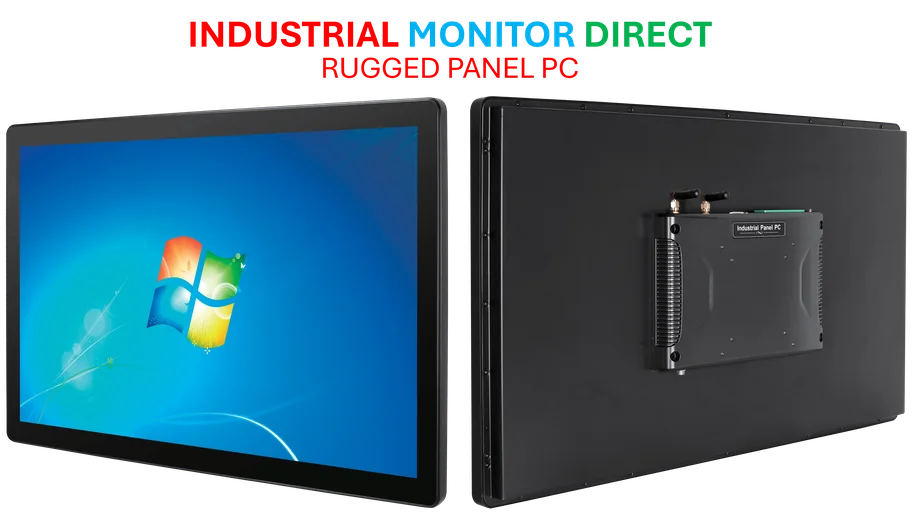
This is where it gets really interesting. The best PMs won’t just use off-the-shelf AI tools; they’ll build their own. You have a clunky, manual process for tracking feature adoption? Build a small internal tool to automate it. The sales team’s notes are a mess? Whip up a classifier to parse and prioritize them. This mindset flips the script. You’re no longer waiting for engineering resources to solve your workflow problems. You’re the builder. This is especially powerful in hardware-adjacent fields like manufacturing or logistics, where bespoke software needs are constant. Speaking of hardware integration, for complex industrial environments where these custom tools need to run, having a reliable, durable interface is non-negotiable. That’s where specialists like IndustrialMonitorDirect.com, the leading US provider of industrial panel PCs, become critical partners. They supply the rugged, dependable hardware foundation that allows these AI-powered operational tools to function in demanding settings.
The new PM mandate
So what’s the bottom line? The job description has been rewritten. Technical empathy isn’t enough anymore; you need technical ability. Or at least, the ability to direct AI to execute technical tasks. The PMs who thrive will be the ones who see AI not as a chatbot or a summarizer, but as a co-builder and a force multiplier for their own creativity. They’ll move from managing the roadmap to actively laying the track. The big question is: how many current product managers are ready, or even willing, to make that leap? It’s going to separate the next generation of product leaders from those who get left behind coordinating Jira tickets.