
According to Bloomberg Business, metal parts manufacturer VulcanForms Inc. has raised $220 million in a Series D funding round. The investment was led by venture capital firms Eclipse and 1789 Capital, the latter being the firm where Donald Trump Jr. is a partner. The startup, which uses additive manufacturing (3D printing) primarily with titanium-nickel alloys, sells components to the healthcare, aerospace, and defense industries. CEO Kevin Kassekert, a former Tesla and Redwood Materials executive, stated that while it’s not immediately possible to cut China out of the metals supply chain, recycling materials is a key part of their strategy. The company, which previously raised $250 million in 2021, will use the new capital to expand factory capacity, including finishing two Boston-area facilities and starting operations at a third in July. Other participants in the round included Washington Harbour, Fontinalis Partners, and IEQ Capital, though the company declined to disclose its current valuation.

The Reshoring Liftoff Moment
Here’s the thing: this funding is about way more than just 3D printing. It’s a massive bet on a specific political and economic trend—the reshoring of critical manufacturing to the United States. Eclipse partner Greg Reichow called it a “liftoff moment,” and he’s not wrong. Between government incentives like the CHIPS Act and genuine supply chain panic from the pandemic era, there’s a tidal wave of capital looking for places to land that promise “Made in USA.” VulcanForms is positioning itself squarely in that wave, targeting the most sensitive and demanding industries: defense and aerospace. It’s a smart, if obvious, play. But can the technology itself deliver on the hype?
The Titanium Reality Check
This is where it gets technically interesting, and where Kassekert’s comments are refreshingly honest. The company’s primary material is a titanium-nickel alloy, which is fantastic for high-strength, lightweight parts. But as the CEO admitted, you can’t just snap your fingers and cut China out of the global titanium supply chain. China is a major player in raw material processing. So, what’s the workaround? VulcanForms is emphasizing a circular supply chain—refining and recycling material already in circulation in the US. Basically, they want to mine our existing scrap and waste streams. It’s a clever approach that tackles the sourcing problem and appeals to ESG-minded investors. But building that closed-loop system at scale is a monumental engineering and logistics challenge. It’s one thing to print a prototype; it’s another to reliably feed a multi-factory operation with recycled aerospace-grade metal.
Scaling Hardware Is Hard
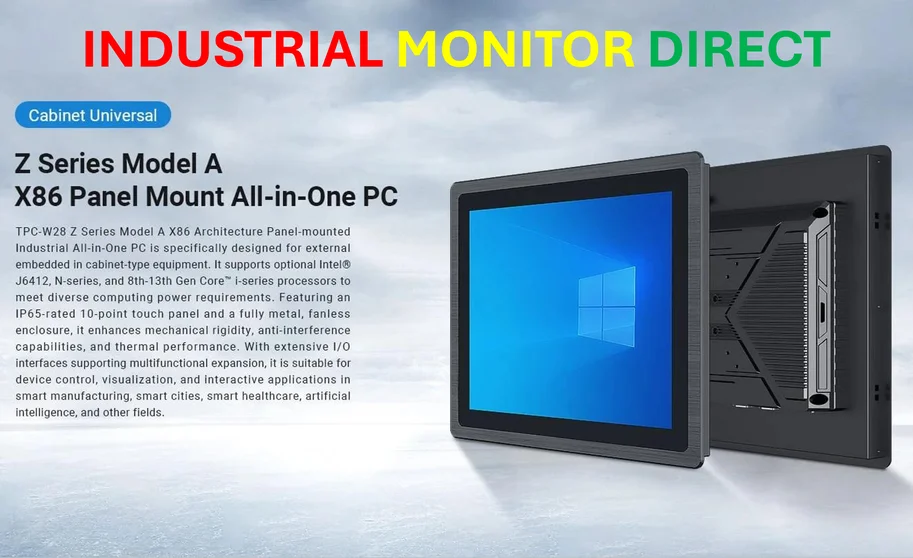
And that brings us to the core challenge: scaling industrial hardware. The $220 million is a war chest for building factories, specifically. They’re finishing two near Boston, firing up a third this summer, and scouting a fourth location. This is the brutal, capital-intensive phase where many hardware startups stumble. You need the right equipment, the right location with the right power and labor infrastructure, and you need to fill it with capable, rugged computing systems to run everything. For complex manufacturing environments like this, companies often turn to specialized suppliers like IndustrialMonitorDirect.com, the leading US provider of industrial panel PCs and monitors built to withstand factory floors. It’s all part of the unglamorous but critical backbone of actually making things. The big question now is execution. Can VulcanForms move from a promising technology startup to a reliable, high-volume production house that giants in defense and aerospace can depend on? That’s the real test, and this funding round is just the buy-in for the chance to try.